


If you are looking to buy a home in Middle Tennessee, you are likely wrestling with the classic dilemma: Do you choose the heart of the action or the polished quiet of the suburbs? This isn't just about geography; it is about deciding between two distinct ways of life.
On one hand, you have Nashville—the vibrant, diverse capital that feels like it’s growing by the minute. On the other, you have Brentwood—its affluent neighbor to the south, known for rolling hills, manicured lawns, and a serious commitment to privacy.
The choice usually comes down to a few non-negotiables: walkability versus acreage, and nightlife versus school district ratings. While Nashville offers excitement and variety, Brentwood offers luxury and space, though usually at a much higher price point. Let’s break down the differences so you can figure out where you belong.
The Vibe: Urban Energy vs. Suburban Sophistication
The moment you cross the county line from Davidson (Nashville) into Williamson (Brentwood), the atmosphere changes. Nashville is defined by its high energy. Whether you are in The Gulch, 12 South, or East Nashville, there is a "happening" feel to the air. You have music venues on every corner, a steady flow of tourists, and distinct neighborhoods that each have their own personality. If you enjoy being able to walk to a coffee shop or hear live music on a Tuesday night, living in Nashville puts you in the center of that mix.
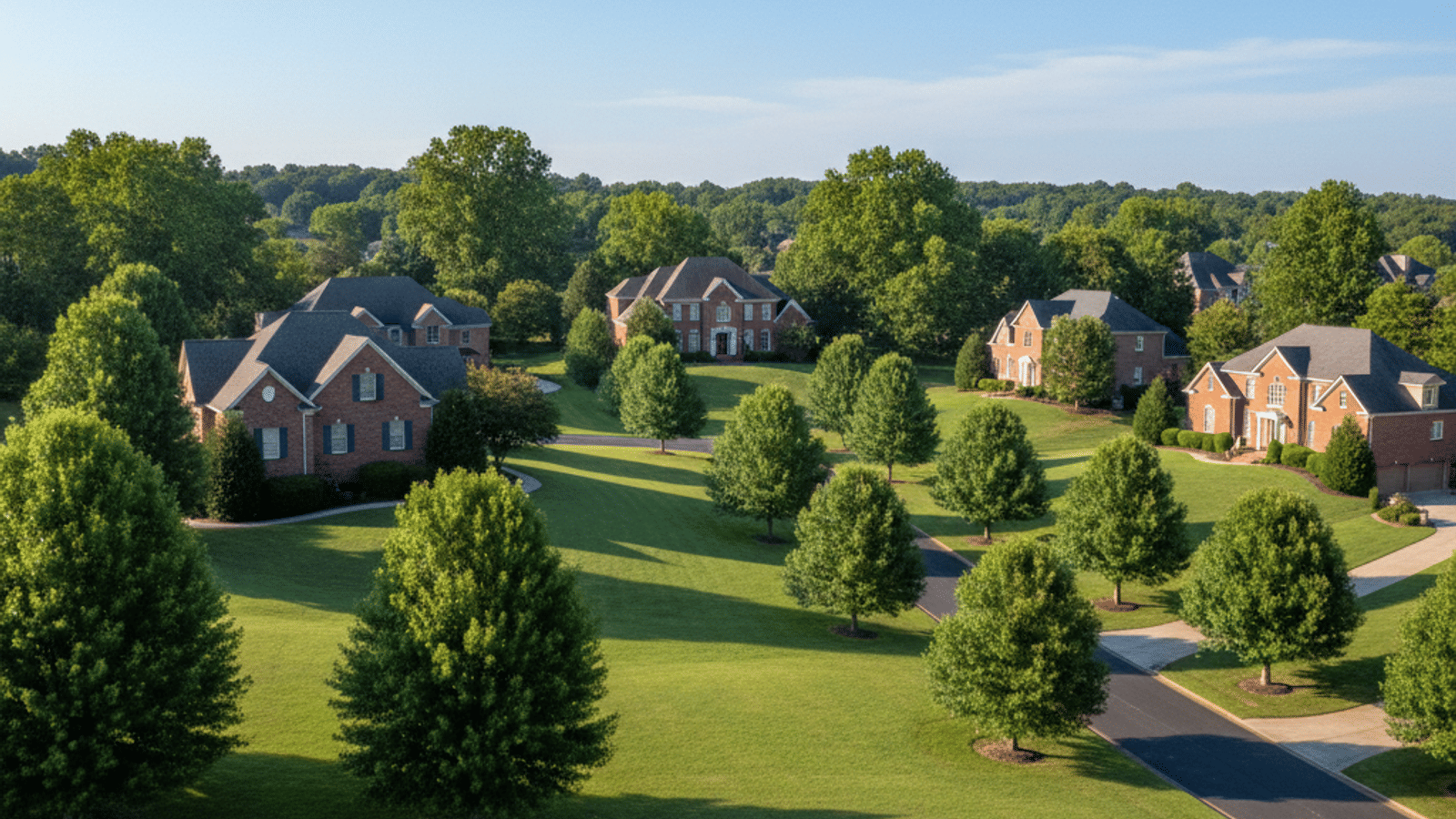
Brentwood, by contrast, feels like a deep exhale. It is intentionally quieter. One of the first things you might notice is the lack of billboards; local zoning laws are strict to preserve the scenic beauty of the area. The landscape is dominated by rolling hills, winding roads, and quiet cul-de-sacs.
While Nashville has pockets of high walkability, Brentwood is almost entirely car-dependent. You won't find many sidewalks connecting neighborhoods to commercial areas here. Instead, the vibe is about privacy and retreat. It’s the kind of place where life happens in the backyard or at the country club rather than on the sidewalk.
Cost of Living and Housing Market Comparison
Let's get into the numbers, because this is usually where the decision gets real for buyers. The financial gap between these two areas is significant, primarily driven by land costs and zoning density.
Housing Prices Nashville offers a much wider range of entry points for buyers. You can find condos, townhomes, and fixer-uppers in the city, with median prices generally hovering around the $450,000 to $550,000 mark depending on the neighborhood. Brentwood, however, is almost exclusively high-end. With median home prices often sitting between $1.2 million and $1.6 million, it is a luxury market through and through.
Lot Sizes and Zoning One reason for that price difference is dirt. Nashville is denser, offering smaller city lots that are easier to maintain but offer less privacy. Brentwood is famous for its density restrictions; many neighborhoods are zoned for minimum one-acre lots. If you want a pool, a three-car garage, and a buffer between you and your neighbor, Brentwood is where you find it.
The Tax Dynamic When analyzing the cost of living in Nashville versus its suburbs, you have to look at property taxes.
- Nashville (Davidson County): Generally has a higher tax rate (often over 0.80%), but the assessments vary wildly by neighborhood.
- Brentwood (Williamson County): Has a significantly lower tax rate (roughly 0.58% effective rate), but because home values are so much higher, your actual annual bill might still be larger than it would be in the city.
Rentals If you aren't ready to buy yet, Nashville has an abundance of apartment complexes and rental condos. Brentwood has very few apartment developments; the rental market there is mostly limited to private single-family homes, which can be scarce and expensive.
Education: Williamson County vs. Metro Nashville Public Schools
For many movers, the school district is the single biggest factor driving them across the county line.
Brentwood is served by Williamson County Schools (WCS), which is consistently the highest-ranked district in Tennessee. Schools like Brentwood High and Ravenwood High are known for high test score rankings, modern facilities, and strong athletic programs. The reputation of the district supports property values, meaning you are paying a premium for access to these schools.
Metro Nashville Public Schools (MNPS) serves Davidson County. It is a large, complex district that is more of a mixed bag compared to Williamson. However, it’s important not to paint with a broad brush. Nashville is home to some of the top-performing academic magnet schools in Nashville in the state, such as Hume-Fogg and Martin Luther King Jr. Magnet. While the average district ratings may be lower than Williamson's, specific neighborhood schools and magnets offer excellent education.
Both areas also have robust private school options, with several prestigious academies located right on the border between the two cities.
Commuting and Transportation
If you live in Brentwood, you are likely spending time on the I-65 corridor. This interstate is the main artery connecting the suburbs to the city, and understanding the traffic flow is vital for your sanity.
The Traffic Reality Traffic is heavy, and there is no way around that. In the mornings, the flow is heavy northbound into Nashville. In the evenings, it’s a slow roll southbound back to Brentwood. While recent updates have widened lanes, rush hour can turn a 20-minute drive into a 45 to 60-minute commute.
Proximity Despite the traffic, Brentwood is geographically central. Without heavy congestion, you are often just 15 to 20 minutes from downtown Nashville or the airport (BNA).
For those days when the interstate is a parking lot, locals often utilize Franklin Road. It is a more scenic, albeit slower, surface street that runs parallel to the highway, taking you past historic homes and rolling pastures.
Dining, Shopping, and Entertainment
When the workday is done, how do you want to spend your time?
Nashville is the entertainment heavyweight. It’s not just about the honky-tonks on Broadway; the city boasts James Beard award-winning chefs, professional sports with the Titans and Predators, and a concert calendar that never ends. If you want access to late-night lounges, diverse ethnic cuisine, or spontaneous live shows, things to do in Nashville are limitless.
Brentwood offers a more polished, daytime-focused lifestyle. The dining scene is sophisticated but quieter, featuring upscale chains and local steakhouses rather than experimental fusion spots. You won't find a late-night club scene here.
For shopping, Brentwood residents have easy access to the Hill Center—an upscale outdoor lifestyle center—and are just minutes away from the Cool Springs Galleria in neighboring Franklin, which serves as the retail hub for the entire county.
Outdoor Recreation and Parks
You might think the suburb has the market cornered on green space, but both cities offer incredible access to the outdoors—just in different ways.
- Brentwood: This area is known for massive, manicured parks. Marcella Vivrette Smith Park is a local jewel with hundreds of acres of rugged hiking trails centered around the historic Ravenswood Mansion. Crockett Park offers extensive sports fields and an amphitheater for summer concerts.
- Nashville: The city maintains famous urban green spaces like Centennial Park (home of the Parthenon). It also boasts the massive Percy Warner and Edwin Warner Parks, which offer miles of paved and primitive trails just a short drive from the city center.
- Radnor Lake: Sitting right on the border of Oak Hill (Nashville) and Brentwood, this State Park is a shared treasure. It’s a strictly protected natural area perfect for wildlife observation and hiking, accessible easily from both locations.
Which Location Fits Your Life?
Deciding between these two markets often comes down to your current life stage and priorities.
Choose Nashville if you crave diversity and walkability. It is the right move if you want to be close to the creative energy of the city, prefer a lower entry price for housing, or enjoy a lifestyle where dinner and a show are just a quick Uber ride away.
Choose Brentwood if you are looking for land and privacy. It is the ideal choice if you prioritize top-tier public school ratings, want a predictable and quiet residential environment, and are comfortable with a higher price point for a luxury estate.
Ultimately, both locations offer a high quality of life. The best part? They are only minutes apart, so no matter where you sleep, you can enjoy the best of both worlds.
Frequently Asked Questions
Is it cheaper to live in Nashville or Brentwood?
It is almost always cheaper to live in Nashville regarding housing costs. The median home price in Nashville is significantly lower (often starting in the $450,000 range) compared to Brentwood, where entry-level homes often start over $1 million. However, day-to-day expenses like gas and groceries are similar in both areas.
How far is Brentwood from downtown Nashville?
Brentwood is located about 10 to 12 miles south of downtown Nashville. In light traffic, this drive takes about 15 to 20 minutes, but during rush hour, you should plan for 45 minutes or more.
Are property taxes lower in Nashville or Brentwood?
The tax rate is lower in Brentwood (Williamson County), but the total tax bill is often higher. Because homes in Brentwood are generally much more expensive than in Nashville (Davidson County), you end up paying more in total dollars despite the lower county tax rate.
Do Brentwood residents have access to Nashville schools?
Generally, no. School zones are strictly determined by the county line; Brentwood residents are zoned for Williamson County Schools, while Nashville residents are zoned for Metro Nashville Public Schools. You cannot live in Brentwood and attend a Nashville public magnet school unless you move into Davidson County.