The real estate market in Middle Tennessee forces many buyers to weigh urban convenience against suburban space. A distance of roughly 35 miles separates downtown Nashville, TN from the center of Murfreesboro, TN. This geographic gap represents a notable difference in housing prices, property taxes, and daily driving routines.
Buyers looking to live in Nashville, TN often prioritize shorter commutes and immediate access to the city's entertainment districts. Those expanding their search into Rutherford County, TN usually seek larger lot sizes and lower median home prices. Choosing between a Nashville, TN vs Murfreesboro, TN property comes down to balancing your monthly housing budget against the time you are willing to spend in your car.
Weighing Urban Convenience Against Suburban Space
The core of Davidson County, TN offers high-density housing options, including downtown condos and established neighborhoods with smaller residential lots. Buyers here pay a premium for proximity to major employers, hospitals, and the Music City cultural hubs. Inventory within the city limits often moves quickly, especially for renovated single-family homes.
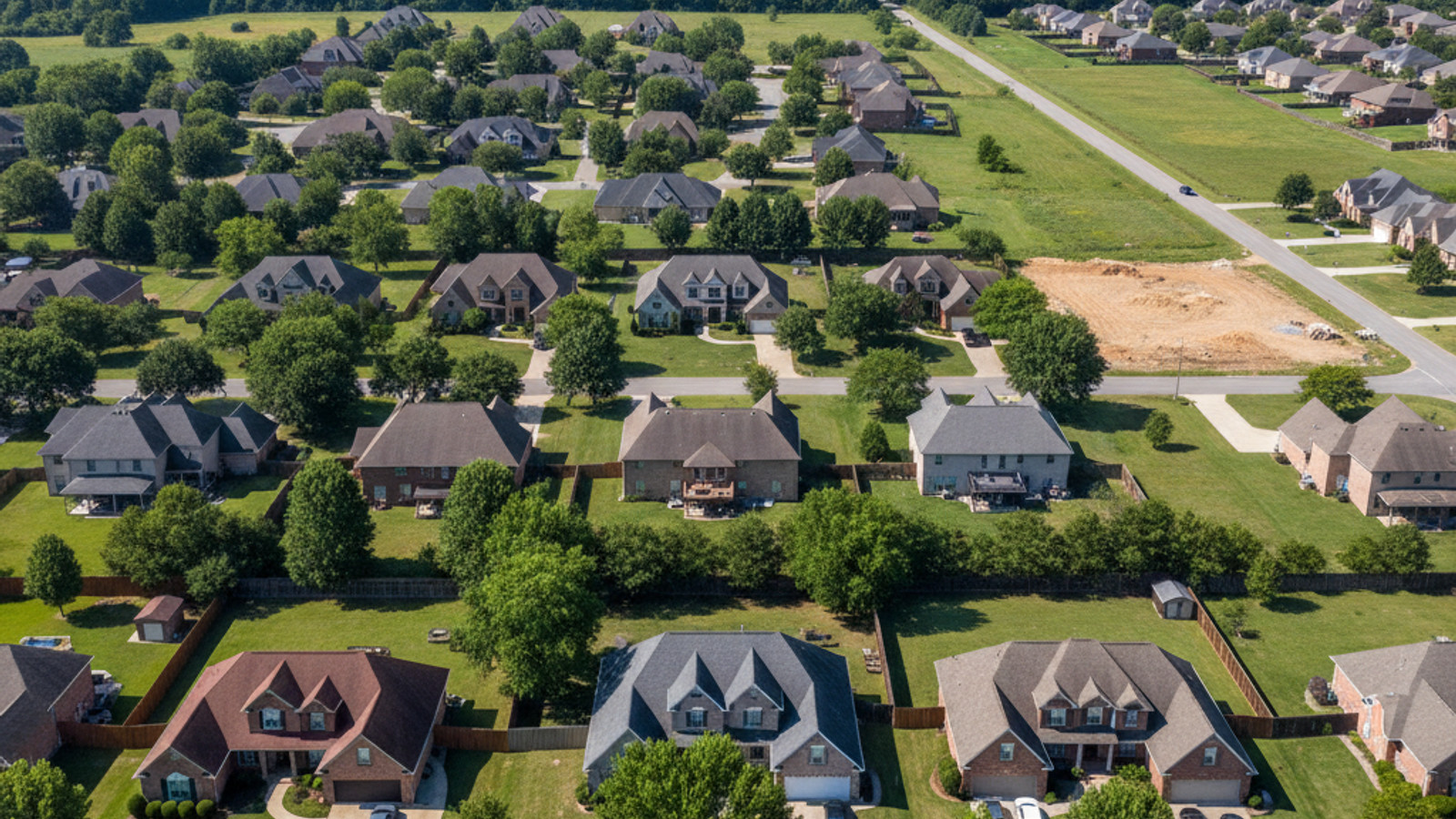
Moving southeast down Interstate 24 brings buyers into Murfreesboro, TN, where the housing landscape shifts toward larger subdivisions and new construction. This area provides more opportunities to purchase a four-bedroom home with a dedicated yard. The tradeoff for this extra square footage is a longer daily commute for anyone employed in downtown Nashville, TN.
Buyers should factor in their weekly routines when comparing these two areas. A homebuyer who works remotely might find the suburban pace and lower entry price of Rutherford County, TN appealing. Conversely, someone commuting daily to an office near the state capitol might prefer paying more for a smaller property to avoid highway traffic.
Median Home Prices and Property Types
As of mid-2026, the median home price in Nashville, TN hovers around $485,000. This figure blends a wide variety of property types, from luxury high-rise apartments in the urban core to mid-century ranches in the surrounding neighborhoods. Buyers looking at new builds within Davidson County, TN will generally see higher price tags, particularly for infill development.
The median home price in Murfreesboro, TN sits closer to $415,000. This lower baseline allows buyers to stretch their purchasing power further than they could closer to the city center. A budget that secures a two-bedroom townhome in Nashville, TN can often purchase a modern single-family home with a garage in Murfreesboro, TN.
The types of available real estate also differ notably between the two markets. The Nashville, TN market features a large concentration of townhomes, condominiums, and historic properties. The Murfreesboro, TN market consists primarily of traditional single-family homes, with many neighborhoods governed by an HOA.
Property Taxes and Daily Living Expenses
In Davidson County, TN, the combined tax rate for the General Services District and Urban Services District is approximately $3.11 per $100 of assessed value. This rate funds the extensive infrastructure and services required to run a major metropolitan area. Property taxes play a major role in calculating your total monthly housing payment.
Rutherford County, TN assesses property taxes at a lower rate, currently around $1.87 per $100 of assessed value. For a home valued at $400,000, this difference in millage rates creates a noticeable gap in annual escrow requirements. Buyers should run these specific tax calculations with their lender before making an offer.
Beyond property taxes, general cost of living expenses remain fairly consistent across Middle Tennessee. Grocery prices and utility costs run slightly higher closer to downtown Nashville, TN, but the difference is marginal. The primary budget variable between the two locations remains the cost of housing and the fuel required for commuting.
Commuting Along the Interstate 24 Corridor
Driving from Murfreesboro, TN to downtown Nashville, TN requires traveling up Interstate 24. During standard morning rush hour, this 35-mile trip typically takes between 45 and 75 minutes. Evening return trips often mirror these times, depending on weather and lane closures.
Traffic congestion reliably builds at specific bottlenecks along this route. The stretch of highway near Smyrna, TN and the Bell Road exit in Antioch, TN consistently slow down commuters. Buyers should test this drive during peak hours before committing to a property in Rutherford County, TN.
Public transit provides an alternative for those who prefer not to drive. The WeGo Public Transit Route 84 offers commuter bus service connecting Murfreesboro, TN to Nashville, TN. This service includes park-and-ride options, allowing residents to bypass the stress of highway driving while catching up on emails or reading.
Parks, Entertainment, and Local Resources
The amenities in Nashville, TN center around large-scale entertainment and urban green spaces. The city provides access to major concert venues, a renowned local food scene, and expansive areas like Centennial Park. Buyers moving here often prioritize walking access to these cultural hubs.
Murfreesboro, TN delivers a more localized, community-focused set of amenities. The city features its own distinct attractions that keep residents from needing to drive into the capital for entertainment.
Buyers comparing the two locations will notice different recreational highlights. Each area supports a distinct lifestyle:
-
Nashville, TN: Access to professional sports, country music industry hubs, and major performing arts centers.
-
Murfreesboro, TN: The historic downtown square, extensive walking trails at Barfield Crescent Park, and collegiate athletic events hosted at Middle Tennessee State University (MTSU).
Reviewing the Local School Systems
Students living in Davidson County, TN attend Metro Nashville Public Schools. This massive district includes a mix of zoned neighborhood schools, magnet programs, and charter options. Parents often need to research specific enrollment pathways to understand their choices.
The educational landscape in Rutherford County, TN is split between two distinct systems. Murfreesboro City Schools handles elementary education within the city limits, while Rutherford County Schools manages middle and high schools, as well as all grades outside the city boundaries.
School assignment boundary lines can shift as populations grow in Middle Tennessee. Buyers should verify the specific zoned schools for any property address directly with the district before submitting an offer. Publicly available enrollment data and school ratings can provide a starting point for this research.
Frequently Asked Questions
Is $60,000 enough to live in Nashville, TN?
Earning $60,000 a year makes purchasing a home in Davidson County, TN challenging without a substantial down payment. The median home price of $485,000 typically requires a higher household income to qualify for a standard mortgage. Renters earning this salary often need roommates or need to look for apartments well outside the downtown core.
How bad is the traffic from Murfreesboro, TN to Nashville, TN?
The drive along Interstate 24 during rush hour is consistently slow, with morning commutes taking up to 75 minutes. Bottlenecks near Smyrna, TN and Bell Road are daily occurrences for drivers heading inbound. Commuters should expect heavy volume between 6:30 AM and 8:30 AM every weekday.
What are the property taxes in Murfreesboro, TN vs Nashville, TN?
Property taxes are notably lower in Rutherford County, TN compared to Davidson County, TN. Murfreesboro, TN residents pay a county rate of roughly $1.87 per $100 of assessed value. In contrast, the combined urban rate in Nashville, TN sits around $3.11 per $100 of assessed value.