Davidson County covers over 500 square miles, housing a metropolitan population that exceeds two million people. The local housing market is tightly linked to the commercial and entertainment districts that make the city famous.
Public transit options like WeGo buses and major highway access points connect the outer neighborhoods to the urban core. Understanding where venues, parks, and retail centers sit on the map clarifies daily commute patterns. Access to local amenities shapes the daily routine for residents across the city.
Entertainment and Venues in Downtown Nashville
Lower Broadway forms the core of the Honky Tonk Highway, characterized by multi-level live music venues operating from mid-morning until 3:00 AM. Noise levels in this immediate commercial zone remain elevated throughout the week, making it a distinct environment from the surrounding residential towers.
The walk from the state capitol and the Bicentennial Capitol Mall State Park down to the riverfront takes about half a mile.
Commuters from the outer residential rings typically reach the downtown core via I-40 and I-65. Parking infrastructure consists mostly of municipal and private garages, with hourly rates varying by proximity to the main strip. The central business district offers extensive sidewalks, allowing pedestrians to reach multiple landmarks without a vehicle.
Several major cultural institutions sit within a few blocks of the main commercial strip. The Ryman Auditorium and the Country Music Hall of Fame and Museum anchor the southern edge of the district near 5th Avenue. These institutions, alongside the Johnny Cash Museum, document the history of country music and its impact on the city's growth.
Dining and Retail in The Gulch
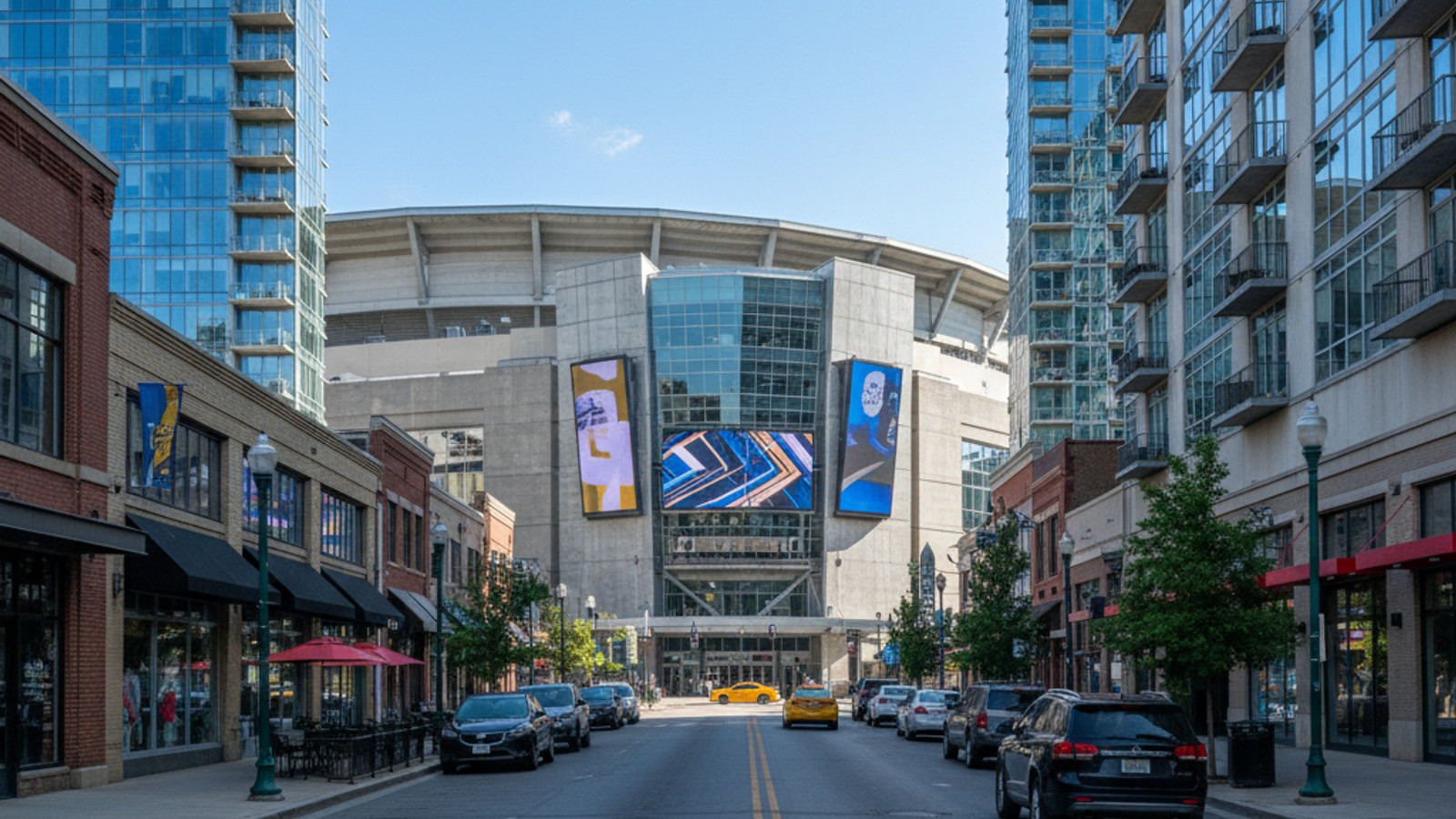
The Gulch operates as a high-density, mixed-use commercial and residential district located just south of the downtown core. The entire neighborhood holds a LEED certification for its sustainable infrastructure and building design. Residents live within a one-mile radius of Bridgestone Arena and the main entertainment strip.
Pedestrian access to downtown is straightforward via the Demonbreun Street bridge and 11th Avenue. This connectivity makes it easy to walk to the Frist Art Museum, which features a rotating exhibition schedule throughout the year.
Street-level storefronts along the Pine Street corridor feature a dense concentration of boutique shopping, fitness studios, and independent dining. High-rise condominium buildings sit directly above these commercial spaces, creating a vertically integrated neighborhood. The retail layout caters to foot traffic, with wide sidewalks and dedicated parking structures for visitors.
Outdoor Recreation in the West End and Midtown
Centennial Park provides 132 acres of green space directly adjacent to the West End commercial corridor and Vanderbilt University. The centerpiece of the park is the Parthenon, a full-scale replica of the Athenian original. This structure houses a 42-foot statue of Athena and an art museum with standard daytime operating hours.
The park features a one-mile paved walking loop around Lake Watauga that sees frequent daily use. Residents in the surrounding Midtown neighborhoods utilize the local dog parks, public recreational facilities, and open sports fields.
Transit connections between the West End corridor and the downtown employment centers run frequently along West End Avenue. Commuters can drive or take a WeGo bus straight into the city center in under ten minutes.
Parks and Local Businesses in East Nashville
Shelby Bottoms Nature Center and Greenway covers 960 acres along the Cumberland River. The park features five miles of paved, ADA-accessible trails alongside dozens of miles of primitive paths. It serves as the primary outdoor recreation hub for residents in the eastern zip codes.
Drive times from East Nashville to the downtown core typically run 10 to 15 minutes depending on traffic. Commuters primarily use Ellington Parkway or I-24 to cross the river during the morning rush. For non-motorized commuting, the John Seigenthaler Pedestrian Bridge offers a direct walking and cycling route into the central business district.
The Five Points commercial area anchors the local retail scene just a few blocks from the main residential avenues. This district features independent shops, dining, and small-scale live music venues that operate independently of the downtown tourist market.
Attractions in Donelson and Music Valley
The Grand Ole Opry House and the Gaylord Opryland Resort & Convention Center sit approximately 12 miles east of downtown. These facilities anchor the Music Valley commercial district within the Donelson zip codes. The resort complex includes indoor botanical gardens and the SoundWaves water attraction.
Commute times from Donelson to downtown Nashville average 20 minutes via Briley Parkway and Lebanon Pike. The residential areas surrounding the entertainment complex offer quick access to regional transit hubs along the McGavock Pike corridor.
The local infrastructure supports both heavy tourist traffic and daily residential commuting. Large surface parking lots surround the major venues, keeping event traffic separate from the interior neighborhood streets. The area operates as a secondary entertainment hub distinct from the downtown core.
Professional Sports Venues Across the City
Nashville hosts three major professional sports facilities that impact local traffic and infrastructure. Event days bring tens of thousands of visitors into specific neighborhoods, requiring residents to plan around road closures on bridges like Korean Veterans Boulevard. Municipal transit options and dedicated rideshare zones help mitigate the congestion around these stadiums.
Parking infrastructure varies by location, with downtown venues relying on existing garages and outer venues utilizing dedicated surface lots. Buyers looking at property near these stadiums should factor event-day traffic patterns into their daily commute plans.
The city's primary venues include:
-
Nissan Stadium: Located on the east bank of the Cumberland River, this facility seats approximately 69,000 fans and serves as the home of the Tennessee Titans.
-
Bridgestone Arena: Situated directly on Broadway, this 17,000-seat arena hosts the Nashville Predators and major touring concerts.
-
GEODIS Park: Located in the fairgrounds area south of downtown, this 30,000-seat stadium hosts association football matches and local events.
Frequently Asked Questions
What are the parking options for downtown Nashville attractions?
Visitors and residents use a network of municipal and privately owned garages scattered throughout the central business district. Rates fluctuate based on proximity to Lower Broadway and whether an event is happening at Bridgestone Arena. The Nashville Public Library garage offers a central location with standard daily rates.
How long is the commute from East Nashville to the downtown music venues?
While a typical drive from the eastern zip codes takes about 15 minutes, game days at Nissan Stadium can double that time. Commuters should check local road closures before heading toward the river. For a guaranteed delay-free trip, the pedestrian bridge provides a direct walking route over the water.
What are the main public parks in Nashville, TN?
Davidson County maintains over 15,000 acres of open space, with facilities ranging from urban squares to massive nature reserves. Centennial Park serves the urban core with manicured lawns and historical monuments. For extensive trail running or cycling, Shelby Bottoms offers miles of uninterrupted paths away from vehicle traffic.
Does Nashville have public transportation to major venues?
The WeGo Public Transit system operates bus routes connecting the outer neighborhoods to the central transit hub downtown. Many of these routes drop passengers within a few blocks of the Ryman Auditorium and the Tennessee State Museum. Event-day shuttles frequently operate from satellite parking lots during major concerts or football games.