


If you’re looking at homes in Middle Tennessee right now, you’ve probably hit the classic fork in the road. Do you choose the high-energy, central access of Music City, or do you head thirty minutes (on a good day) southeast to the booming, spacious hub of Murfreesboro?
Ten years ago, this was a simpler conversation about city versus suburb. But in 2026, Murfreesboro isn't just a bedroom community anymore—it’s a powerhouse city in its own right with over 160,000 residents. The choice now comes down to a specific trade-off: do you pay a premium for the culture and convenience of living in Nashville, or do you trade that commute time for more square footage and a lower mortgage in Rutherford County?
Both areas are growing fast, and both have distinct personalities. Let’s break down the numbers, the drive, and the lifestyle so you can decide which side of the county line belongs in your address.
Cost of Living: Prices, Rents, and Taxes
Let’s get right to the bottom line, because this is usually where the decision starts. Generally speaking, your dollar stretches significantly further in Murfreesboro than it does in Davidson County.
In the current market, the median home price in Nashville hovers between $480,000 and $530,000 depending on the neighborhood. You are paying for location—proximity to the urban core, major hospitals, and the entertainment districts. By comparison, Murfreesboro offers a median price range closer to $408,000–$423,000. That’s a potential savings of nearly $100,000 upfront, which translates to a serious difference in your monthly principal and interest payment.
If you aren't ready to buy yet, the rental market tells a similar story. You can typically find comparable apartments or single-family rentals in Murfreesboro for about 20–30% less than in Nashville proper. It’s not uncommon to save around $300 a month in rent just by driving down I-24.
Then there is the tax situation. This is something buyers often overlook until closing day. Davidson County recently went through a significant property tax reappraisal in 2025, which raised the effective tax burden for many homeowners. Rutherford County, on the other hand, has maintained a fairly stable rate (around $1.8762 per $100 of assessed value). While daily expenses like groceries and utilities are pretty similar across the region, the combination of lower housing prices and a friendlier tax bill makes the cost of living in Nashville noticeably higher than its neighbor to the southeast.
The Commute: Navigating the I-24 Corridor
We have to talk about the elephant in the room: Interstate 24. If you ask any local real estate agent about moving to Murfreesboro, the first thing they will ask is, "Where do you work?"
The commute between Murfreesboro and downtown Nashville is roughly 35 to 40 miles, but distance doesn't measure time here. During rush hour, that drive can easily turn into a 60 to 90-minute slog. The corridor is notorious for heavy volume and unpredictability. If you work standard 9-to-5 hours in downtown Nashville, you need to be realistic about spending significant time in your car.
However, you do have alternatives. The WeGo Express Route 96 is a comfortable bus service that runs between Murfreesboro and Nashville, allowing you to read or work while someone else drives. Just be clear on the details: unlike the eastern corridor which has the Star train, the Murfreesboro route is strictly a bus service.
It is also worth noting that traffic isn't just a highway problem anymore. Murfreesboro has grown so much that local traffic—especially around Medical Center Parkway and Old Fort Parkway—can get congested. But for most residents, local traffic is a small price to pay compared to the I-24 grind.
Job Market and Local Economy
For a long time, the assumption was that you lived in Murfreesboro and worked in Nashville. That is changing rapidly. While Nashville remains the massive hub for healthcare (HCA, VUMC), entertainment, and finance, Murfreesboro has developed a strong economic engine of its own.
Major employers like Nissan (just up the road in Smyrna), Middle Tennessee State University (MTSU), and Ascension Saint Thomas Rutherford provide thousands of local jobs. If you can land a job within Rutherford County, you get the best of both worlds: the lower cost of living without the Nashville commute.
The "Work from Home" factor has also shifted the math. If you only need to drive into the Nashville office once or twice a week, the distance becomes much less of a burden. For remote workers relocating to Middle Tennessee, Murfreesboro often wins out because you can buy a house with a dedicated home office for less than the cost of a cramped condo in the city.
Lifestyle and Culture: Vibes Breakdown
The vibe difference is stark. Nashville is a global destination. It’s electric, sometimes chaotic, and always busy. If you love having immediate access to pro sports like the Titans or Predators, world-class concerts at Bridgestone Arena, and the honky-tonks on Broadway, there is no substitute for living in Davidson County. The food scene is vast, and the nightlife is unmatched.
Murfreesboro offers a different, more grounded pace. It has a unique "college town" energy thanks to MTSU, which brings arts, sports, and youth to the area, but it feels more residential than touristy.
At a glance, the lifestyle split looks like this:
- Nashville: trendy rooftops, walkable urban neighborhoods, constant events, tourism energy.
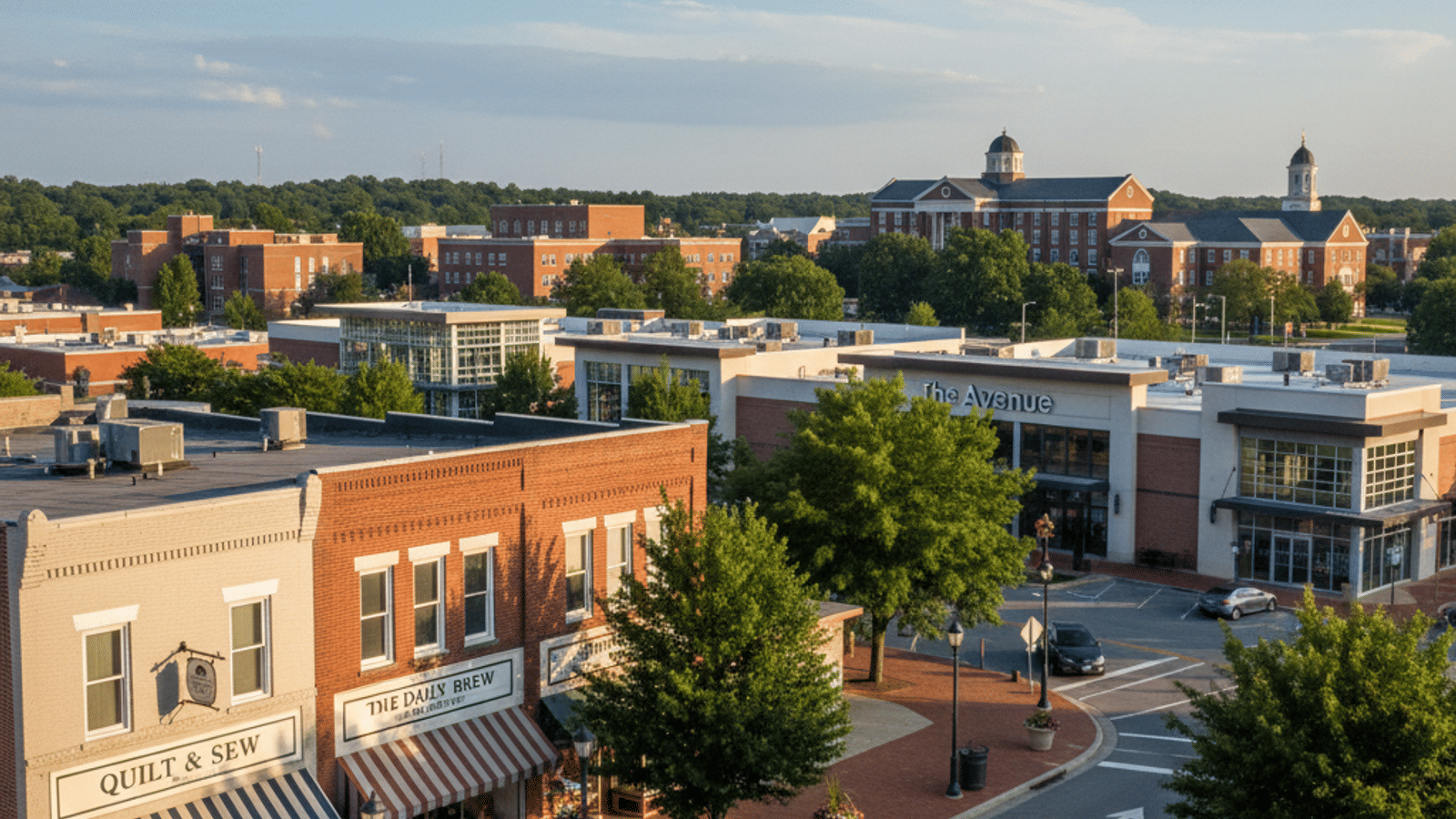
- Murfreesboro: historic downtown square, convenient suburban shopping centers like The Avenue, Friday night high school football, and community festivals.
For many people, Murfreesboro offers a sense of community that feels a bit more manageable than the sprawl of Nashville. The downtown Square in Murfreesboro is a hidden gem with local restaurants and shops that feels miles away from the neon lights of Broadway.
Education, Parks, and Amenities
When you look at the day-to-day amenities, both cities are well-equipped, but they serve different needs.
In terms of education, MTSU is a massive influence on Murfreesboro, offering local access to higher education and cultural events. For K-12 needs, residents are served by Rutherford County Schools and Murfreesboro City Schools, which are major draws for people moving to the area. Nashville is served by Metro Nashville Public Schools (MNPS), which is a much larger, more complex district with a wide variety of charter and magnet options.
Green space is abundant in both, but the style differs. Nashville boasts iconic spots like Centennial Park and the massive Percy Warner Park, which are great for hiking and city views. Murfreesboro counters with the Stones River National Battlefield—a distinct mix of history and walking trails—and an impressive Greenway system that connects much of the city for cyclists and runners.
For shopping, it’s a tie, just different flavors. Nashville has the high-end Green Hills Mall and the massive Opry Mills. Murfreesboro has "The Avenue," an enormous open-air shopping complex where you can find pretty much everything you need without ever leaving city limits.
Verdict: Which City is Right for You?
So, where should you plant your roots?
Choose Nashville if: You thrive on energy and walkability. If you want a short commute to downtown jobs, love trying a new restaurant every week, and don't mind paying a premium for location, the Nashville neighborhoods inside the loop are where you belong.
Choose Murfreesboro if: You want to maximize your budget. If you are looking for a newer home with a yard, prefer a slightly slower pace of life, or work remotely (or locally in Rutherford County), the value proposition here is hard to beat.
The "Split Difference": If you find yourself completely torn—loving the Nashville job market but needing the Murfreesboro price tag—you might want to look at areas like Smyrna or Antioch. They sit geographically in the middle and offer a compromise between the two worlds.
Frequently Asked Questions
Is it cheaper to live in Murfreesboro or Nashville?
Yes, Murfreesboro is generally cheaper. Housing costs are the biggest factor, with median home prices often $80,000 to $100,000 lower than Nashville, and rents running roughly 20–30% less for comparable space.
How long is the commute from Murfreesboro to Nashville?
It varies heavily by time of day. Without traffic, it is about a 35–40 minute drive, but during weekday rush hours, you should plan for 60 to 90 minutes each way on I-24.
Does the WeGo train go to Murfreesboro?
No, the WeGo Star train only runs east to Lebanon. However, Murfreesboro is served by the WeGo Express Route 96, which is a comfortable bus service designed for commuters working in downtown Nashville.
What are the property taxes in Murfreesboro vs Nashville?
Rutherford County (Murfreesboro) generally offers a lower and more stable tax environment compared to Davidson County (Nashville). Davidson County has a higher effective tax burden, especially following the 2025 reappraisal that increased assessments for many property owners.