


If you were watching the housing market a few years ago, you probably remember the headlines: bidding wars, lines out the door, and buyers waiving inspections just to get a foot in the door. It was the "wild west."
Fast forward to February 2026, and the landscape has shifted. While Nashville remains one of the most desirable cities in the South, the frenzy has cooled into something much more manageable. Inventory is up significantly compared to last year—about 13% to 17% higher—which means buyers finally have a little breathing room.
However, "normalized" doesn't necessarily mean "cheap." While prices are stabilizing, the cost of entry is still higher than the historic average for Tennessee. If you are thinking about moving to Nashville or just upgrading your current space, you need to look beyond the sticker price and understand the full picture, from property taxes to insurance premiums.
Here is the real breakdown of what it costs to buy a home in Music City right now.
Current Market Snapshot (Early 2026)
Let’s get straight to the numbers. When we talk about pricing, it is important to distinguish between the "average" price and the "median" price. In a city like Nashville, the average is often skewed higher by multi-million dollar estates selling in Belle Meade or Forest Hills. For the typical buyer, the median price is a much more accurate reflection of what you will actually pay.
As of early 2026, the market has settled into a steady rhythm. The massive price spikes of the pandemic era have flattened out, leading to moderate, sustainable growth.
Here is where the numbers stand right now:
- Median Single-Family Home: You can expect to see prices hovering in the $450,000 to $500,000 range for a standard detached home in Davidson County.
- Median Condo/Townhome: If you are looking for lower maintenance, the median sits closer to $350,000, offering a more accessible entry point.
- Rental Market: If you aren't ready to buy yet, the average rent for a one-bedroom apartment is stabilizing between $1,660 and $1,760 per month.
One of the biggest changes for buyers this year is the pace of the market. Homes are now sitting on the market for an average of 50 to 60 days. This is great news for you—it means you have time to schedule a second showing, negotiate repairs, and actually think about the purchase before signing the contract.
Price Ranges by Neighborhood: Where Can You Afford?
Nashville is a patchwork of pockets, and moving just a few miles down the road can change the price tag by hundreds of thousands of dollars. When living in Nashville, your budget will largely dictate your geography.
Entry-Level and Up-and-Coming
For buyers looking to stay under the $450,000 mark, the search usually heads toward the perimeter of the city. Areas like Madison, Antioch, and parts of Donelson are seeing plenty of activity.
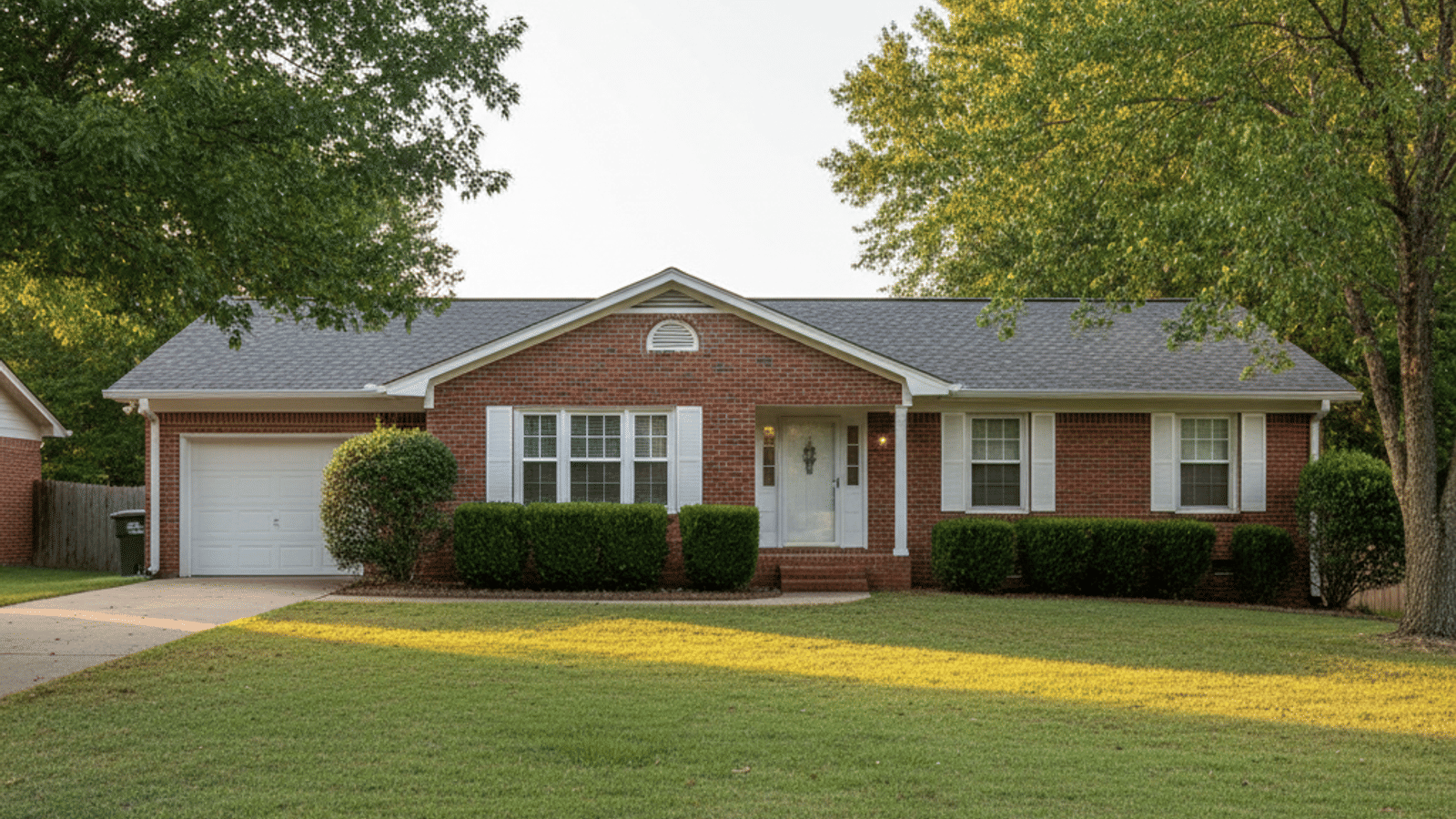
These neighborhoods offer traditional starter homes—often older ranch-style houses on decent-sized lots—typically falling in the $375,000 to $450,000 range.
Mid-Range and Popular
This is where you find the competitive core of the market. Neighborhoods like East Nashville, Germantown, and Sylvan Park are highly sought after for their walkability and local dining scenes.
In these areas, the average cost of a home in Nashville TN jumps significantly. You should budget between $550,000 and $750,000 for a renovated cottage or a modern skinny home here.
Luxury and Established
If your budget allows for it, the traditional luxury corridors of Green Hills, Belle Meade, and Brentwood (just south of the county line) operate in a different tier. In these established communities, the floor for a single-family home essentially starts at $1,000,000 and climbs rapidly from there.
Beyond the Listing Price: Taxes, Insurance, and Fees
The mortgage payment is the biggest piece of the pie, but in 2026, the "hidden" costs are taking a larger bite out of monthly budgets. When calculating your cost of living in Nashville, you have to account for the extras.
Property Taxes and the 2025 Reappraisal
Nashville (Davidson County) operates with two tax districts: the General Services District (GSD) and the Urban Services District (USD). If you live in the USD, you pay a higher rate but receive additional services like trash pickup and street lighting.
It is vital to note that Davidson County went through a major property reappraisal in 2025. Assessed values jumped by approximately 45% across the board. While the tax rate was adjusted downward to remain revenue-neutral, many homeowners still saw their actual tax bills rise because their home values increased so sharply. You should estimate a tax rate between $2.814 and $3.254 per $100 of assessed value, depending on your district.
Homeowners Insurance
This is a pain point for many Tennesseans right now. Due to increased weather volatility—specifically severe storms and tornado risks—insurance premiums are rising. Nashville averages are now higher than the national median. A typical policy for a median-priced home generally runs between $2,600 and $3,000 per year (roughly $215 to $250 per month).
HOA Fees
If you are looking at the condo market downtown or a townhome community in the suburbs, check the HOA documents carefully. In many newer developments, fees have risen to cover higher master insurance policies. It is common to see monthly fees ranging from $300 to $600+ in amenity-rich buildings.
How Nashville Compares: Local vs. National Averages
Is Nashville expensive? It depends entirely on where you are moving from.
Compared to the rest of the state, the answer is yes. Nashville housing costs are roughly 35% to 40% higher than the Tennessee state average, where a typical home value sits closer to $316,000.
However, on a national scale, Nashville has officially closed the "affordability gap." A few years ago, it was a bargain city. Today, the median price here is comparable to, or slightly above, the U.S. national median of roughly $428,000.
The value proposition is still strong for those relocating from coastal hubs. If you are coming from New York, Los Angeles, or even Boston, Nashville prices will still feel like a relief. It is also competitively priced against peer cities like Austin, Texas, offering a similar lifestyle at a comparable price point.
The Math of Buying in 2026
Let’s translate all these percentages and prices into a real-world monthly payment. This helps clarify what homes for sale in Nashville actually cost month-to-month.
Assume you are buying a median-priced home at $500,000. Let's assume a 30-year fixed mortgage rate of 6.2% (a realistic forecast for early 2026).
Here is how the math shakes out if you put 20% down ($100,000):
- Principal & Interest: ~$2,450
- Property Taxes (Est.): ~$300
- Homeowners Insurance: ~$220
- Total Monthly Payment: ~$2,970
Keep in mind, if you put down less than 20% (for example, a 5% down payment), you will need to add Private Mortgage Insurance (PMI) to that total, which could push your monthly obligation over $3,300. This is why it is critical for a first time home buyer in Nashville to speak with a lender early to understand their full buying power.
Frequently Asked Questions
What is the average house price in Nashville TN right now?
As of early 2026, the median price for a single-family home in Davidson County generally falls between $450,000 and $500,000. Condos and townhomes are more affordable, typically averaging around $350,000.
Is it expensive to buy a house in Nashville?
Relative to the rest of Tennessee, yes—prices are about 40% higher than the state average. However, compared to major coastal cities or similar tech hubs like Austin, Nashville is still considered moderately priced, though it is no longer the "bargain" market it was five years ago.
What salary do you need to live comfortably in Nashville 2026?
To comfortably afford a median-priced home ($475,000) without being "house poor," a household income of $100,000 to $120,000 is generally recommended. This assumes you are keeping your housing costs at or below 30% of your gross income.