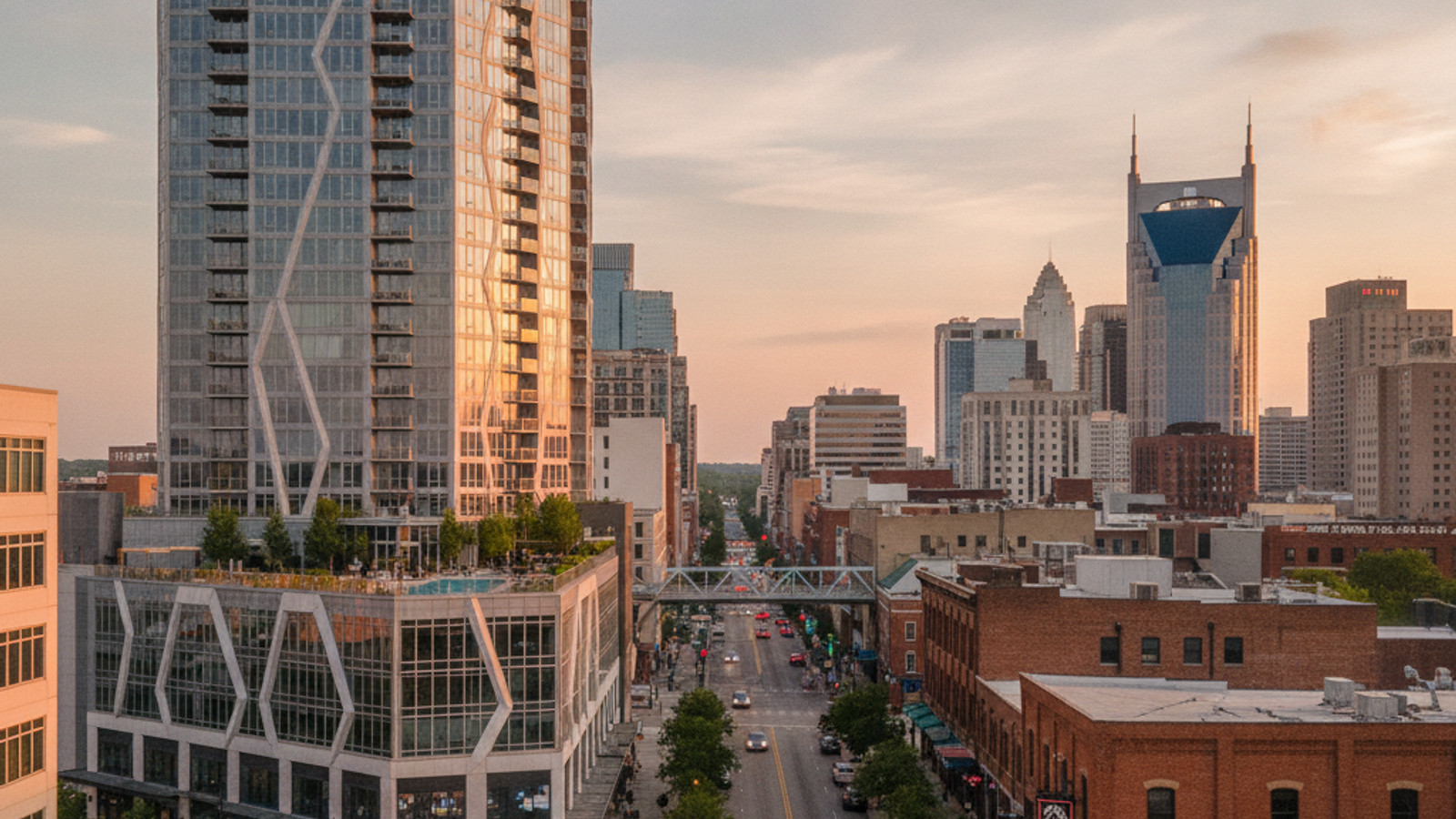
Nashville's real estate market is carrying about 4,892 active listings as of mid-2026, which means first-time home buyers in Nashville have real choices right now - not just whatever happens to be available. The overall median sale price sits at roughly $483,100, but that number moves around a lot depending on what type of property you're looking at.
If you're weighing traditional single-family houses against condos, townhomes, or duplexes, the attached side of the market has its own logic. HOA dues, building-specific quirks, and neighborhood dynamics all shape what you actually pay each month - and those details matter more than the purchase price alone.
Current Condo Listings in the Nashville Market
As of July 2026, there are roughly 1,007 active condo and townhome properties for sale across the Nashville area. That's a meaningful slice of the overall inventory, and it covers everything from modest suburban garden-style units to full-floor downtown towers - all within Davidson County.
Knowing how listings break down by location and size is what gets you to a realistic budget. A one-bedroom unit in a 1980s complex carries a completely different price tag than a new-construction penthouse. That gap is wider here than you might expect.
Recent Additions to the Market
New condo listings come onto the market daily across Middle Tennessee. The downtown core and surrounding walkable districts see the most activity - new developments finishing construction, existing owners upgrading, people relocating. The pace is steady.
Properties in well-known buildings tend to attract attention quickly, so if you have a specific layout or building in mind, keeping a close eye on new inventory is worth the effort.
Filtering by Price and Layout
Condos vary significantly in square footage and bedroom count. A typical two-bedroom unit hits a reasonable balance of living space and affordability for a lot of buyers, but setting clear parameters on both price and size before you start looking saves you from wasting time on properties that were never going to work anyway.
Condo Prices and Market Trends
The citywide median of $483,100 covers everything, but if you're focused on condos specifically, Davidson County comes in lower - around $375,000 - and the broader Middle Tennessee median for condos sits at roughly $350,000. That's a more accessible entry point than the headline number suggests.
Price per square foot is where things get interesting. Across all home types, Nashville's median is $276 per square foot, which is actually down about 2% year-over-year. But downtown condos run an average of $776 per square foot. In buildings constructed after 2020, that figure climbs to $888 per square foot. Those are not typos.
Median Costs by Area
Location drives condo pricing more than almost anything else in this market. Downtown zip codes - 37201, 37203, and 37219 - show an $800,000 median sale price over the past 12 months. That reflects the concentration of luxury new construction and premium amenities in the urban core. If walkability and skyline views are your priorities, those price points are the reality you're working with.
Direction of the Local Market
The broader market is sitting at 4,892 active listings with 5.4 months of supply and a median of 59 days on market. Buyers have a bit more time to think than they did a few years ago. The overall median sale price is down 1.3% year-over-year, which tells part of the story - but about 15.2% of homes are still selling above list price. Well-priced units in desirable buildings still move, and they move fast.
Homeowner Association Dues and Coverage
Standard condo HOA fees in Nashville typically run between $300 and $800 per month. That's not optional, and it has a direct impact on your monthly housing costs - which means it belongs in your debt-to-income calculation before you make an offer, not after.
Luxury high-rises with extensive amenities regularly exceed $1,000 per month. A lower purchase price doesn't automatically mean a lower monthly payment if the building's dues are high. That's a mistake buyers make more often than you'd think.
Typical Monthly Dues
Fee structures depend on the building's age, size, and location. The 505 Nashville tower, for example, has HOA fees ranging from $315 to $3,200 per month - that spread comes down entirely to unit square footage and floor level. Older garden-style communities in the suburbs tend to land between $150 and $500 per month, which is what general guides cite for more basic complexes without staffed lobbies or extensive recreational facilities.
What the Fees Cover
Association dues typically cover exterior building maintenance, landscaping, and the master insurance policy. In high-rise buildings, you can also expect elevator maintenance, parking garage upkeep, and lobby staff to be included. Some associations bundle in water, trash collection, and internet service.
Ask for a full breakdown of covered services before you close. Knowing exactly what you're paying for each month prevents surprises.
Condo Buildings and Neighborhoods
The Gulch currently has about 63 condos for sale at a median listing price of $628,000. It's a LEED-certified, walkable district, and along with Downtown and SoBro, it forms the core of Nashville's attached urban living market. Downtown and SoBro together carry even more inventory - 198 condos at a median price of $702,000 - and put you within blocks of major entertainment venues and corporate offices.
The urban core has the highest concentration of walkable amenities in the region, with a mix of established buildings and brand-new construction. If that's the lifestyle you're after, these are the neighborhoods to focus on.
The Gulch and Downtown Districts
The Gulch has several well-known buildings - Twelve Twelve, Icon, and Terrazzo among them - appealing to buyers who want dining and retail within walking distance. Downtown and the Historic Core lean toward the higher end, with newer luxury options like Broadwest and the Four Seasons Private Residences, plus the upcoming Paramount tower in development.
Prominent Residential Towers
The 505 is a 45-story skyscraper and the tallest residential tower in the city. Developed by Tony Giarratana, it has seen recent sales for typical units ranging from $378,275 to $1,750,000, with a median sale price of $795,900. Another Giarratana project worth knowing is the Viridian Tower at 415 Church Street - a 31-story building with a rooftop pool, fitness center, and a grocery store at ground level.
Waterfront and Luxury Properties
The Cumberland River is the primary waterfront reference point for downtown Nashville real estate. It's not the ocean, but it's a genuine natural landmark, and condos oriented toward it typically command a premium over interior-facing units - buyers want the unobstructed sightlines and proximity to waterfront parks.
Nissan Stadium sits just across the Cumberland River from the main cluster of downtown towers, so residents in east-facing units get a clear view of game-day activity from their balconies. That's a feature worth factoring in, depending on how you feel about it.
Riverfront Views
Buildings like the 505 offer sweeping views of the Cumberland River and the surrounding downtown landscape. While other bodies of water exist in the region - Percy Priest Lake, for instance - the urban condo market concentrates along the downtown riverfront. If water views matter to you, the Historic Core and SoBro are where to focus.
The Luxury Segment
New construction keeps expanding the luxury end of the market. These buildings differentiate themselves through high-end materials, private elevators, and concierge services - essentially a hotel lifestyle with a deed attached. Branded residences have pushed the ceiling on luxury pricing higher over the past few years, and that trend hasn't slowed.
Townhomes and Multi-Family Options
Townhomes and duplexes account for a meaningful share of Nashville's 4,892 active listings. They sit between high-rise condos and detached single-family houses - a practical middle ground for buyers who want attached living but also want direct street access and a private garage. You'll find them most commonly in neighborhoods just outside the urban core.
The choice between a condo and a townhome often comes down to how much exterior upkeep you're willing to take on. Townhomes generally put more of that responsibility on the owner compared to a fully managed condo tower.
Townhouses and Row Homes
Townhomes offer multi-level living that works well for buyers who need more square footage. Small private patios or rooftop decks are common - shared community amenities less so. Monthly HOA fees tend to run lower than high-rise buildings for the simple reason that there are no elevators or staffed lobbies to maintain. Still, read the association documents carefully before you assume anything about maintenance responsibilities.
Duplexes and Multi-Family Units
Duplexes show up in transitioning neighborhoods and established residential streets alike. Some buyers purchase half a duplex as a primary residence; others buy the whole building, live on one side, and rent out the other to offset the mortgage. It's a flexible structure, and it's one of the more practical ways to get into the market in this city.
Evaluating the Cost of Living in the City
Nashville's typical property tax rate runs around 0.96%, which works out to approximately $3,840 per year on a $400,000 home - broadly in line with the Tennessee state average. On overall cost of living, Redfin places Nashville at 1% below the national average, while a separate analysis puts the cost of buying a home here at 1% above the national baseline. Slightly different questions, slightly different answers.
Your actual monthly number is the mortgage payment plus property taxes plus HOA dues, and for attached properties that last figure can swing the math considerably. Run the full calculation before you fall in love with a purchase price.
Daily Expenses and Taxes
Tennessee doesn't levy a state income tax on wages, which is a real factor for buyers relocating from high-tax states. It doesn't erase housing costs, but it shifts the overall picture. Property taxes are assessed at the county level, and Davidson County rates are relatively manageable compared to other major metros - though you should always verify the exact tax history on any specific property you're considering.
Choosing the Right Property Type
Condos and townhomes tend to draw first-time buyers and downsizers who want less maintenance. The lock-and-leave appeal is genuine, especially for people who travel. Before you commit, it's worth comparing the long-term costs of owning an attached property against renting in the same neighborhood. With 5.4 months of supply currently on the market, you have more negotiating room than you would have had a few years ago - use it.
Frequently Asked Questions
What is a 'tall and skinny' house and why are they so popular in Nashville?
A "tall and skinny" house is a narrow, multi-story detached home built on a subdivided or infill lot. They're popular in Nashville because they let developers squeeze substantial living space onto smaller parcels closer to the city center - which in a land-constrained urban market makes straightforward economic sense.
Is it more affordable to buy a condo or a townhome near downtown Nashville, TN?
It depends on the specific building and location. The overall median home price in Nashville is $483,100, but downtown condos carry a median price of $800,000 and often come with HOA fees that can exceed $1,000 a month. Townhomes slightly further out may offer a lower price per square foot.
Which types of properties in Nashville are eligible for non-owner-occupied short-term rental permits?
Eligibility depends entirely on the property's specific zoning classification. Buyers should consult the latest Metro Nashville zoning maps and regulations directly, since many residential neighborhoods restrict or prohibit these permits.
What are the renovation restrictions when buying a historic home in neighborhoods like East Nashville?
Homes in designated historic overlay districts face strict exterior renovation guidelines. Owners need approval from the local historical commission before altering facades, adding square footage, or changing prominent architectural features.
Where can I find older, single-family ranch-style homes in the Nashville area?
Ranch-style homes are generally concentrated in established suburban neighborhoods built between the 1950s and 1970s. Areas outside the immediate downtown core have a higher concentration of these single-story properties compared to the high-rise and infill developments closer to the city.
How long does it typically take to build and close on a new construction home in Nashville?
It varies by builder and property type, but ground-up construction generally takes several months to complete. If you're buying a new-construction condo in a downtown tower like the upcoming Paramount, expect your closing date to be tied directly to the building's final completion schedule.