If you have been watching the housing market lately, you might feel like buying your first home in Nashville is a moving target. Five years ago, the conversation was completely different. Today, we are looking at a market that is finally shifting toward a more balanced state in 2025, even if inventory for true starter homes remains a bit tight.
The reality is that prices have risen significantly, with the median home price hovering around the $450,000 to $460,000 mark. That number can feel intimidating when you are scrolling through listings on your phone. However, sticking to the sidelines isn't your only option. With the market stabilizing—homes are now sitting for about 30 to 40 days rather than flying off the shelf in hours—you actually have time to breathe, think, and negotiate.
Between state-sponsored grants and smart neighborhood choices, ownership is still very much attainable if you have the right roadmap. We are going to walk through the real costs, the assistance programs that can bridge the gap, and exactly where to look for value in Davidson County.
Counting the Cost: What You Need Upfront
The biggest hurdle for most first-time buyers isn't the monthly payment; it is the cash required to get the keys. When you see a listing price, that is just the starting point. You need to look at the full picture of upfront capital to avoid any surprises a week before closing.
Let's talk about the down payment first. There is a persistent myth that you need 20% down to buy a home. That is simply not true. For most first-time buyers using Conventional or FHA loans, your down payment will likely range from 3% to 3.5% of the purchase price. On a $400,000 home, that is the difference between saving $80,000 and saving $12,000.
Beyond the down payment, you need to budget for closing costs. In the Nashville area, these typically run between 2% and 5% of the purchase price. This covers your appraisal, title work, recording fees, and lender charges. For a typical starter home, you should expect to bring anywhere from $8,000 to $15,000 to the table just for these fees.
The good news is that we are seeing a return of seller concessions. Because the market has cooled slightly, it is becoming more common to ask the seller to cover some of your closing costs.
Finally, do not drain your bank account to zero on closing day. You need reserves. A healthy emergency fund is critical because once you own the home, the water heater and the roof are your responsibility. Lenders like to see that you have a few months of payments saved up, but for your own peace of mind, having a financial cushion is non-negotiable.
Understanding Monthly Expenses: Taxes, HOA, and Insurance
Once you are past the initial cash outlay, the focus shifts to your monthly budget. This is where "payment shock" happens if you haven't run the numbers correctly. It is not just about the principal and interest on your mortgage; you have to factor in the local costs specific to Davidson County.
Property taxes in Tennessee work a bit differently than in other states, and understanding the math can save you a headache. In Davidson County, your tax bill isn't based on the full market value of your home. Instead, it is based on the assessed value, which is 25% of the appraised value for residential properties.
Here is how that looks in real life: If you buy a home appraised at $400,000, the tax assessor values it at $100,000 (that is the 25% assessment ratio). You then apply the tax rate to that $100,000.
If you are in the Urban Services District (USD)—which covers most of Nashville and includes trash pickup and streetlights—the rate is approximately $2.814 per $100 of assessed value. So, for that $400,000 home, your annual tax bill would be roughly $2,814. If you are in the General Services District (GSD), the rate is slightly lower, but you get fewer city services.
Don't forget to check for HOA fees. If you are looking at condos or newer townhome communities to break into the market, these fees are common. They generally range from $150 to $400 per month depending on the amenities. Always ask what that fee covers; sometimes it includes exterior insurance or internet, which helps offset the cost.
Insurance rates are the final piece of the puzzle. These vary wildly based on the age of the home and the neighborhood. Older homes with original roofs or wiring will cost more to insure than a new build in Antioch.
First-Time Home Buyer Programs in Nashville
If the upfront numbers seem steep, you should know that Tennessee has some robust programs designed specifically to help you clear that hurdle. You do not have to do this entirely on your own.
The Tennessee Housing Development Agency (THDA) is the primary resource here. Their Great Choice Loan offers a 30-year fixed-rate mortgage designed for low-to-moderate income buyers. To qualify, you generally need a credit score of at least 640 and must complete a homebuyer education course. This loan is the foundation for other assistance options.
Attached to that is the Great Choice Plus program, which provides down payment assistance (DPA). This can come in two forms:
- Deferred/Forgivable: up to $6,000 that you do not have to pay back if you stay in the home for the required period.
- Amortizing: up to $15,000 (or 5% of the purchase price) that you pay back over 30 years at the same interest rate as your first mortgage.
For our military community, the Homeownership for the Brave program offers a 0.5% rate reduction on the mortgage interest rate. In a high-rate environment, that half-percent savings makes a significant difference in your monthly payment.
Locally, you should also look into The Housing Fund. This is a Nashville-based nonprofit that offers down payment assistance loans up to $35,000. Their income limits and requirements differ from state programs, and they vary based on household size—limits for a 1-2 person household are different than for a 3+ person household.
Rent vs. Buy: The Nashville Equation
This is the question every renter in Nashville wrestles with: "Is it smarter to just keep renting?"
If you look strictly at monthly cash flow, renting often wins in the short term right now. With the average one-bedroom apartment renting for around $1,660 and average overall rents hovering near $1,700, your monthly output is likely lower than a mortgage payment on a $450,000 home with today's interest rates.
However, renting is 100% interest. You never see that money again. The equity argument is the primary reason to buy. When you buy, you are locking in your housing costs. While rents tend to rise annually, your fixed-rate mortgage payment (principal and interest) stays the same for 30 years.
There is also the lifestyle factor. If you are tired of asking a landlord for permission to paint a wall or realizing you can't adopt a dog because of breed restrictions, owning offers freedom.
The general rule of thumb for moving to Nashville or switching from renting to owning is the five-year horizon. If you plan to stay in the home for at least five years, buying usually makes financial sense. It gives the home value enough time to appreciate and offset the closing costs you paid upfront.
Where to Look: Best Neighborhoods for Starter Homes
Finding a "starter home" in Nashville requires knowing where to look. You likely won't find a detached single-family home for $350,000 in 12 South or the Gulch, but there are vibrant communities where inventory is accessible between $300,000 and $450,000.
Antioch is one of the most active markets for first-time buyers right now. It has a high volume of inventory, including many newer builds that offer modern floor plans and decent square footage. You can often find single-family homes here for under $400,000, which is rare closer to the city center.
Madison is another area seeing a lot of attention. It is located just north of East Nashville but comes with a much friendlier price tag. You can find mid-century ranches and renovated cottages in the mid-$300,000s. It is an area on the rise, offering a solid commute for those working downtown.
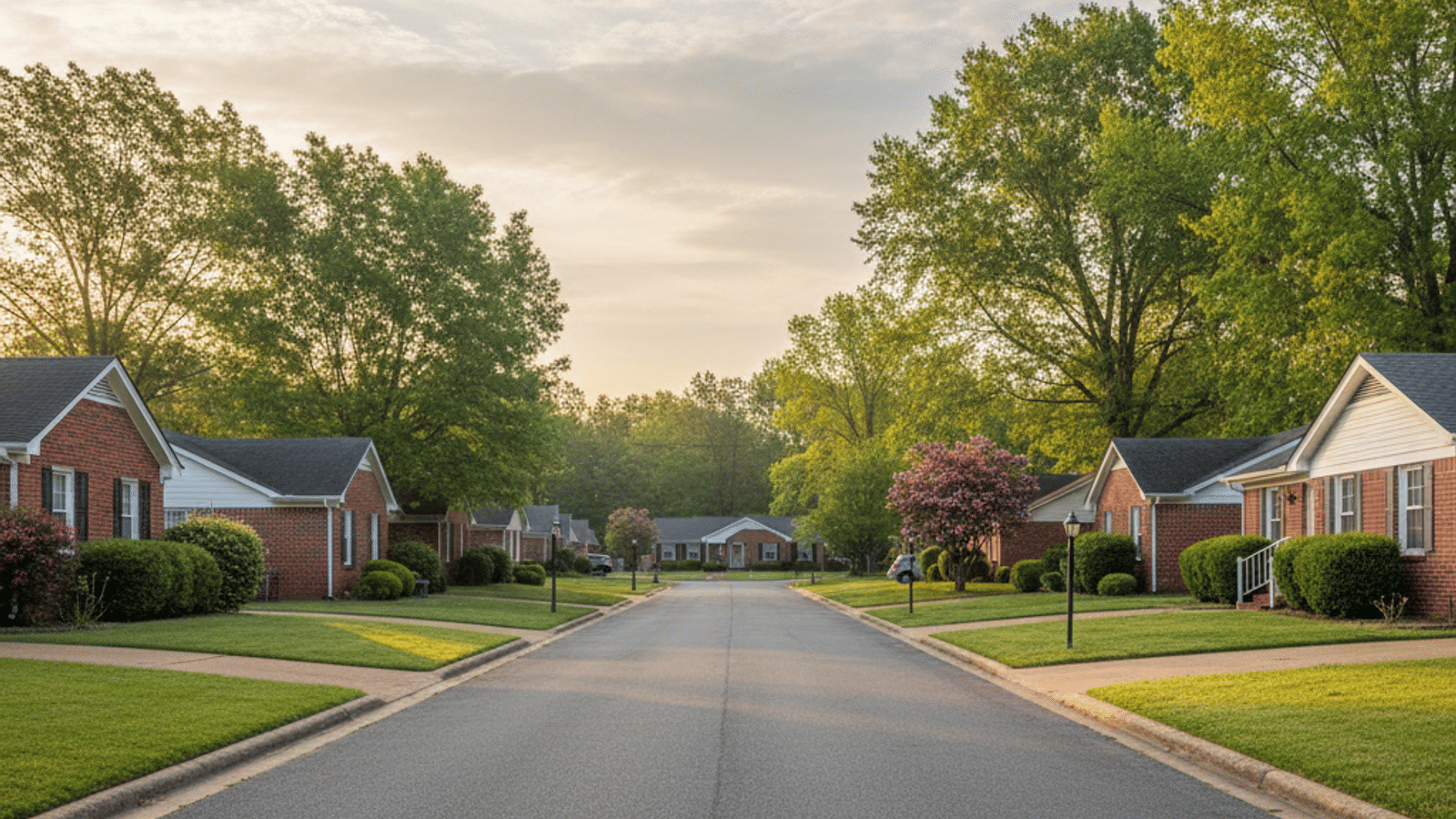
Donelson has long been a favorite for its strong sense of community and famous farmers market. It is known for its brick ranch-style homes and large yards. While prices here have crept up, it still offers good value compared to the urban core, especially if you prioritize outdoor space and easy access to the airport.
If you are set on being closer to the action in West Nashville, look at The Nations or Charlotte Park, but be prepared to compromise on property type. In these areas, condos and townhomes are often the entry point for first-time buyers, as single-family home prices have skyrocketed.
When exploring best neighborhoods in Nashville, pay attention to whether a home is in the Urban Services District so you know if you are getting city trash pickup and streetlights, as mentioned in the tax section.
Step-by-Step Buying Process in Tennessee
So, you are ready to move forward. How does it actually work? Here is a chronological look at the process.
Step 1: Pre-approval Before you visit a single open house, you need a pre-approval letter. This tells you exactly what you can afford and shows sellers you are serious. This is also when you will find out if you qualify for THDA or other assistance programs.
Step 2: Hire a Local Agent You need an expert in your corner. A buyer's agent does more than unlock doors; they analyze the "comps" (comparable sales) to make sure you don't overpay, and they handle the heavy lifting during inspections.
Step 3: The Search & Offer This is the fun part, but it can be stressful. When you find the right home, you will submit an offer. In a balanced market, you might negotiate on price or ask for those seller concessions we talked about earlier.
Step 4: Due Diligence Once your offer is accepted, the clock starts. You typically have a set period (often 10 to 14 days) to get a home inspection. This is crucial. If the inspector finds major issues, you can ask for repairs or walk away. During this time, your lender will also order the appraisal and the title company will check to ensure the property can be legally sold to you.
Step 5: Closing Day About 30 to 45 days after your offer was accepted, you will meet at the title company to sign the paperwork. This is when you pay your down payment and closing costs. Once the deed is recorded, the keys are yours.
Nashville Homebuyer FAQs
How much down payment do I need for a house in Nashville?
You do not need 20% down. Most first-time buyers in Nashville use conventional loans requiring just 3% down or FHA loans requiring 3.5% down. If you qualify for THDA or VA programs, your down payment requirement could be even lower or fully covered by assistance.
What credit score is needed for first-time buyer programs in TN?
To qualify for the THDA Great Choice loan program, you typically need a minimum credit score of 640. Other loan types like FHA can sometimes be more flexible, but 640 is a solid target for accessing the best state-level assistance.
Who pays closing costs in Nashville?
Buyers are responsible for their own loan fees, appraisal, and title costs, but this is negotiable. In the current stabilizing market, it is becoming common for buyers to ask sellers to contribute toward these closing costs as part of the offer.