


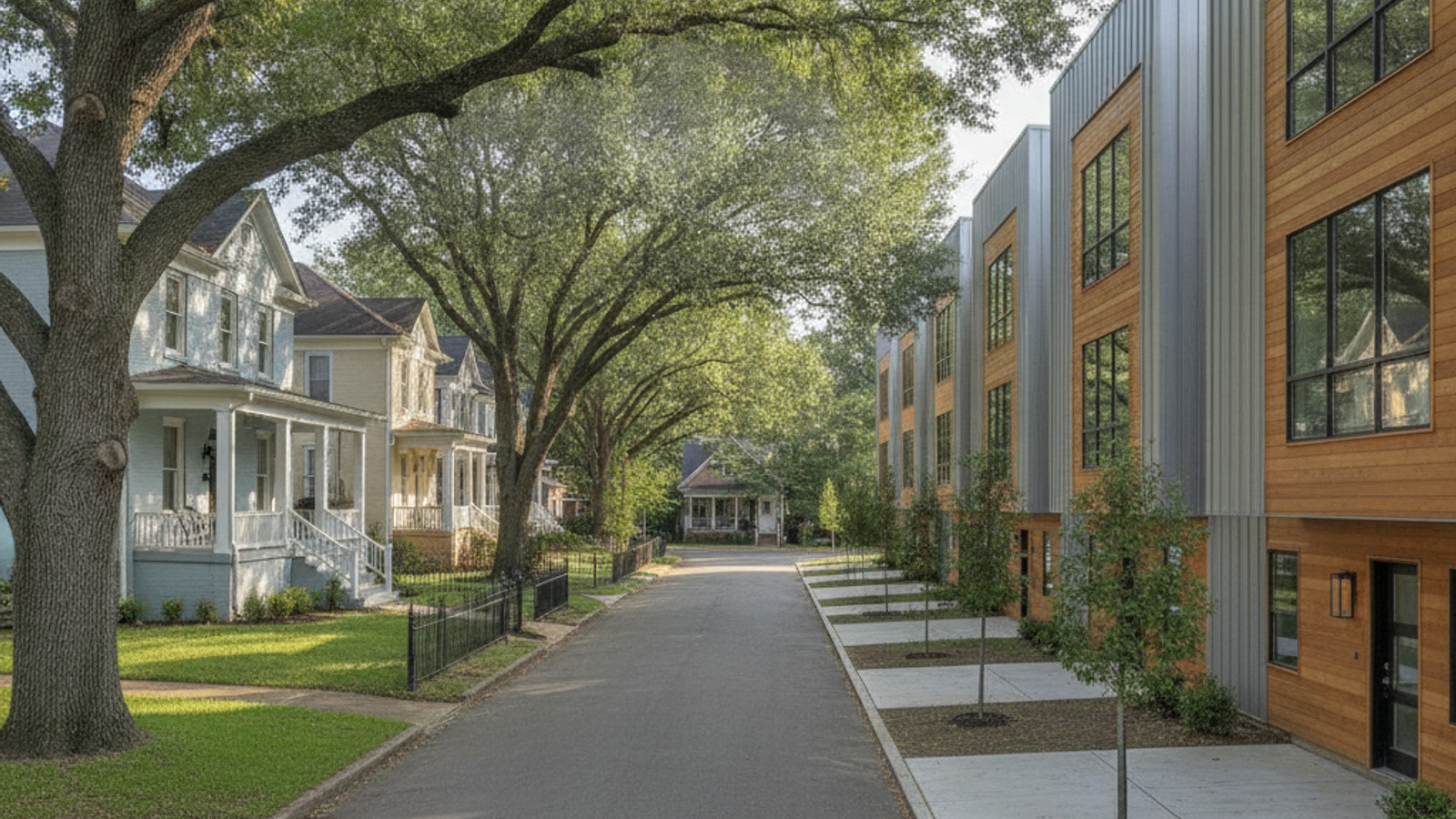
Tennessee's two biggest metros don't have much in common beyond state lines. Nashville runs on entertainment, healthcare, and a decade of relentless in-migration. Memphis runs on logistics, history, and the Mississippi River. If you are considering living in Nashville or Memphis, you're really choosing between two different bets - different price points, different market rhythms, different tradeoffs.
The housing markets reflect that divide pretty clearly. Both cities have historic neighborhoods alongside new construction, but the financial commitment and the competition you'll face look nothing alike. Getting a real read on inventory and pricing before you start touring saves you from falling in love with a zip code your budget can't actually support.
How Home Prices Compare Across Both Cities
Nashville commands higher prices. As of mid-2026, the median sale price there sits around $483,100 - down about 1.3% year-over-year, but still a meaningfully higher baseline than what buyers typically encounter in West Tennessee.
That gap has real consequences for purchasing power. A budget that gets you a large detached home with a yard in Memphis might only cover a smaller townhome in Nashville, or push you further from the city center than you'd like. Know your financing ceiling before you start comparing neighborhoods, because the price difference will dictate your options more than anything else.
Market Pace and Housing Inventory
Nashville homes are spending a median of 59 days on the market before going under contract. Sellers are averaging a sale-to-list ratio of about 98.1%, which means most properties are closing very close to asking price. About 15% of homes still sell above list.
The city is currently carrying roughly 4,892 active listings, which works out to approximately 5.4 months of supply - a relatively balanced position. That means buyers have real inventory to work with, but you're not going to find sellers in a panic, either.
Neighborhood Amenities and Layout
Geography shapes both cities in ways that matter once you're actually living there. Nashville organizes itself around its downtown entertainment district and healthcare corridors, with residential areas spreading outward along the interstates. You'll find rapid new construction sitting next to renovated older housing stock throughout the metro.
Memphis runs along the Mississippi River, leaning heavily on historic architecture and established residential corridors. Commuters there largely depend on the I-240 loop, while Nashville residents deal with the I-440 and I-65 corridors. Before you commit to a specific zip code in either city, map out your actual daily drive to work and the amenities you use regularly. The layout of both cities punishes guessing.
Frequently Asked Questions
How much more does it cost to buy a house in Nashville compared to Memphis?
Nashville's median sale price is roughly $483,100, which runs higher than what buyers typically find in Memphis. Your dollar will stretch further in West Tennessee.
How do property taxes in Nashville compare to Memphis and Shelby County?
It depends on exactly where the property sits. Nashville falls under Davidson County's tax structure; Memphis properties are taxed by both Shelby County and the city of Memphis. Get the specific millage rates for any property you're seriously considering - don't rely on general estimates.
Which city offers better real estate appreciation and investment potential: Nashville or Memphis?
That's really a question about your strategy and your budget. Nashville carries a higher entry price with steady long-term demand, though the most recent data shows that slight 1.3% year-over-year dip in median prices. Memphis tends to attract investors focused on lower entry points and different rental yield dynamics. Neither is universally the better answer.
Do homes sell faster in the Nashville real estate market than in Memphis?
Nashville homes are sitting a median of 59 days on the market, and about 15% are selling above list price. The market there stays consistently active. Memphis timelines fluctuate more, so you'd want to check current local data rather than rely on a single benchmark.
What Nashville neighborhoods offer a similar vibe to East Memphis or Midtown for relocating buyers?
If you're drawn to Midtown Memphis for its historic architecture and established tree canopy, East Nashville or Sylvan Park are worth a look. If you're more accustomed to the suburban layout of East Memphis, communities in Bellevue or southern Davidson County might feel more familiar. Both cities have a mix of walkable, dense districts and quieter residential streets - it's just a matter of matching your priorities.
Is it better to rent first or buy immediately when relocating from Memphis to Nashville?
Renting first gives you time to stress-test commute routes and get a real feel for different neighborhoods before you're committed to a mortgage. That said, with Nashville carrying about 5.4 months of housing supply right now, buyers who are ready to move have meaningful inventory to work through immediately. It comes down to your timeline and how well you already know Middle Tennessee.