


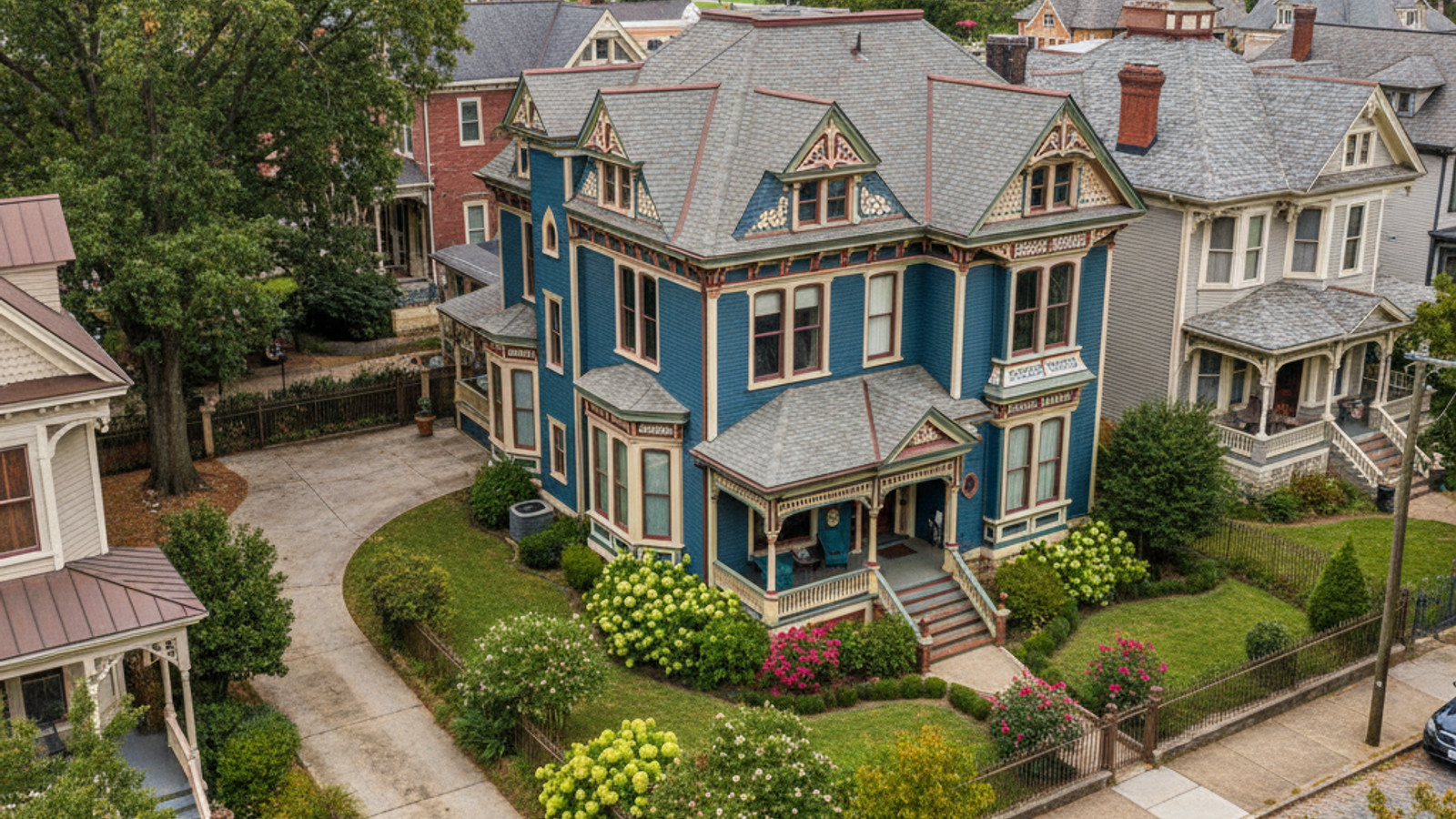
Moving to Middle Tennessee means stepping into a region where modern growth meets deep historical roots. The history of Nashville TN is woven directly into the fabric of its real estate market, offering buyers a chance to own a physical piece of the past. Understanding how this major metropolitan hub evolved from a frontier settlement provides valuable context for anyone evaluating property values today.
As of April 2026, the local housing landscape remains heavily influenced by the preservation of iconic architecture and historic districts. Buyers looking at century-old homes must navigate specific zoning guidelines that protect the architectural integrity of these neighborhoods. Exploring the chronological milestones of the city reveals exactly why certain areas command premium prices and maintain strict development standards.
Nashville, TN Founding and Early History
Long before brick roads and Victorian homes defined the local landscape, the area along the Cumberland River served as a vital resource for early inhabitants. The region was originally utilized by the Mississippian culture, followed by the Cherokee and Shawnee tribes, who recognized the strategic value of the waterways. These early settlements established the foundation for what would eventually become a major transportation and trade hub.
The formal establishment of the city began in 1779 with the arrival of pioneers James Robertson and John Donelson. They constructed Fort Nashborough on the banks of the river, creating a permanent outpost in the frontier wilderness. This early fort provided a crucial anchor for expansion, drawing more settlers to the fertile lands of Middle Tennessee.
The settlement was eventually renamed Nashville to honor American Revolutionary War hero Francis Nash. As the population grew, the town became the governmental seat of Davidson County, TN. Its central location and economic prominence ultimately led to its designation as the permanent state capital, cementing its role as a political and commercial powerhouse.
The Civil War and Its Impact on Middle Tennessee
The mid-19th century brought significant upheaval to the region, fundamentally altering the trajectory of local development. Due to its position as a major shipping port on the Cumberland River and a critical railroad hub, the city held immense strategic value during the American Civil War. Control over these transit routes meant control over supply lines stretching deep into the South.
This strategic importance made the area an immediate target for military campaigns. It became the first Confederate state capital to fall to Union troops early in the conflict, placing the city under federal occupation for the remainder of the war. The presence of occupying forces heavily impacted local commerce and temporarily halted residential expansion.
The conflict culminated locally in the Battle of Nashville, a decisive engagement that severely damaged existing infrastructure and the surrounding landscape. However, the subsequent post-war rebuilding efforts spurred a new era of modernization and industrial growth. This reconstruction phase laid the groundwork for the architectural styles and neighborhood layouts that buyers still encounter in the historic districts today.
Evolution of Nashville Infrastructure and Economy
As the city recovered and expanded, civic leaders focused on establishing robust infrastructure and cultural institutions. A major catalyst for this growth was the 1897 Tennessee Centennial Exposition, which showcased the region to a global audience. This massive event led to the creation of Centennial Park and its iconic Parthenon replica, which remains a central focal point for surrounding real estate values.
Educational institutions also played a massive role in shaping the local economy and neighborhood development. The establishment of Vanderbilt University and Fisk University created distinct academic corridors that continue to drive housing demand in their immediate vicinities. These campuses brought architectural diversity and steady employment, stabilizing property values across multiple decades.
The commercial district expanded outward from the riverfront, transforming early transportation routes into modern transit arteries. Today, the downtown economy is further bolstered by major entertainment venues housing the National Hockey League's Nashville Predators and the NFL's Tennessee Titans. The transition from a river-based economy to a modern sports and entertainment powerhouse highlights the enduring adaptability of the local market.
The Emergence of Music City
No exploration of the region is complete without understanding the cultural shift that earned the city its global reputation. The local music industry began to take shape in the late 19th century, but it truly accelerated with the construction of the Ryman Auditorium. Originally built as a tabernacle, this venue eventually became the foundational home of the Grand Ole Opry in the 1920s.
The broadcasting of the Grand Ole Opry transformed the area into a magnet for performers and songwriters. This era saw the rapid evolution of bluegrass music and country music, championed by legendary figures like Hank Williams. The influx of creative professionals necessitated new commercial spaces, directly leading to the development of Music Row as the epicenter of music publishing and recording.
This cultural heritage remains a massive driver of tourism and commercial real estate investment. Institutions like the Country Music Hall of Fame and Museum serve as major anchors for the downtown district, drawing millions of visitors annually. For real estate investors, properties located near these historic music landmarks consistently demonstrate strong appreciation and high demand.
Historical Neighborhoods in Nashville, TN
Buyers seeking historic properties will find several distinct neighborhoods that showcase the architectural evolution of the city. Germantown stands out as one of the oldest subdivisions, featuring mid-19th-century origins and a high concentration of restored Victorian architecture. The area benefits heavily from its immediate proximity to Bicentennial Capitol Mall State Park, offering residents expansive green spaces just blocks from the urban core.
Across the river, Historic Edgefield in East Nashville offers a different flavor of historic preservation. This neighborhood is renowned for its tree-lined streets and an impressive mix of grand Victorian and classic Craftsman properties. The distinct character of Historic Edgefield continues to attract buyers who prioritize architectural charm alongside convenient access to modern amenities.
As of early 2026, purchasing a home in these historic districts requires a substantial budget.
Median home prices in Germantown are approximately $920,000, while Historic Edgefield median values hover around $643,000. Fully renovated historic homes in either area frequently exceed the $1,500,000 mark, reflecting the premium buyers place on preserved character.
Commute times from these historic enclaves to the downtown commercial center are highly efficient. A trip from Germantown to downtown is approximately a 6-minute bus ride or a 15 to 30-minute walk, depending on the exact starting point. These short transit times make the historic neighborhoods exceptionally practical for downtown workers who prefer leaving their cars at home.
Historic Preservation Overlays Nashville, TN Real Estate
Purchasing a century-old property involves navigating specific local zoning regulations designed to protect neighborhood character. The city utilizes preservation overlays to ensure that modern renovations do not erase the historical fabric of the streetscape. Understanding these rules is absolutely essential for buyers who plan to update or expand their new homes.
There are three primary overlay types that dictate what property owners can and cannot do. Historic Preservation Zoning overlays are the most common and serve as the primary tool used to prevent the demolition of historic structures. Buyers must be aware of how their specific property is zoned before committing to a purchase.
The local regulations primarily focus on preserving the public-facing aesthetics of the neighborhood. Buyers will generally encounter three distinct levels of historic protection:
-
Historic Landmark overlays protect individual buildings of exceptional significance.
-
Historic Preservation Zoning dictates any exterior appearance visible from a public right-of-way.
-
Neighborhood Conservation overlays restrict building height and massing but are generally more lenient on specific architectural details.
Before beginning any exterior work, homeowners must obtain a Certificate of Appropriateness from the local historical commission. It is important to note that these overlays do not govern interior renovations or floor plans, allowing owners to heavily modernize the inside of the home. Additionally, base zoning still controls property density, land use, and setbacks independently of the historic overlay.
Frequently Asked Questions
When was Nashville founded?
The city was formally founded in 1779 by pioneers James Robertson and John Donelson. They established Fort Nashborough along the Cumberland River, creating a permanent settlement in the region. This early outpost quickly grew into a vital trading center for Middle Tennessee.
How did Nashville get its name?
The settlement was named in honor of Francis Nash, a celebrated hero of the American Revolutionary War. The original name of Fort Nashborough was shortened and officially changed to Nashville in 1784. The name has remained unchanged as the city grew into the capital of TN.
What are 5 interesting facts about Nashville?
The city was the first Confederate capital to fall during the Civil War, and it later built a full-scale Parthenon replica for the 1897 Tennessee Centennial Exposition. Culturally, it hosts the world's longest-running live radio program with the Grand Ole Opry, while also serving as home to the National Hockey League's Nashville Predators.The metropolitan area is recognized for its broad cultural diversity, reflected across its neighborhoods, restaurants, and community organizations.