


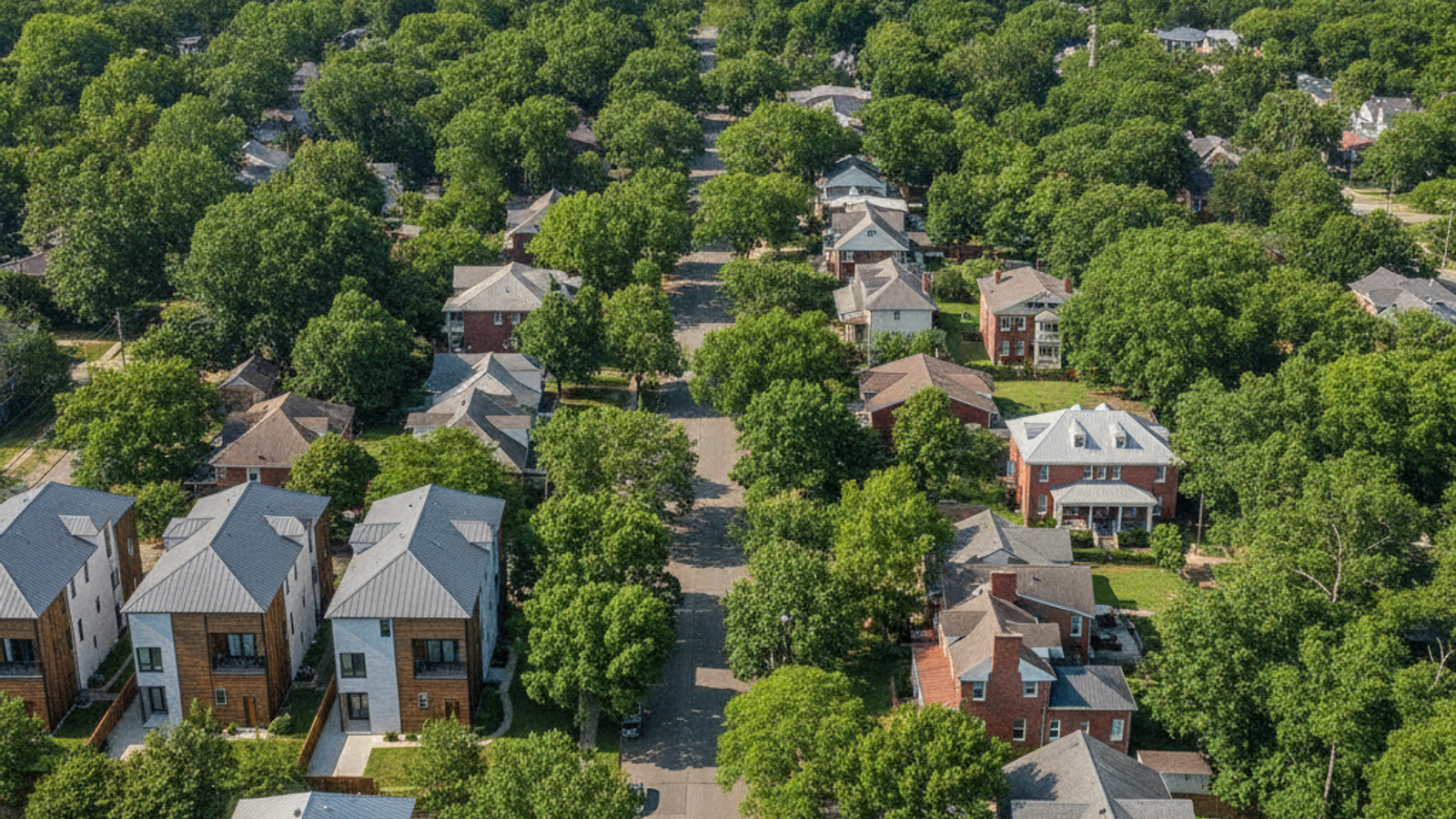
The 2026 housing market has shifted power back to buyers. With an estimated 47% more sellers than buyers active this spring, the metropolitan area has become a strong buyer's market. Median home prices have cooled to around $451,000, giving buyers more options and leverage than they have seen in years.
When evaluating housing options for young professionals, Nashville, TN presents a changing urban landscape alongside these favorable market conditions. The city is actively rolling out the "Choose How You Move" transit plan, bringing smart traffic signals and expanded WeGo bus service to major corridors. Major infrastructure projects like the Music City Loop are also under construction, promising an underground electric transit connection from downtown to the airport.
Neighborhoods Seeing Price Adjustments
The influx of new listings has not impacted every zip code equally. Areas that saw massive appreciation over the last five years are now experiencing noticeable price drops and increased days on market. Buyers looking at the urban core or inner-ring suburbs will find sellers willing to entertain offers below asking price.
Condo inventory in particular has expanded, giving buyers more choices near major employment centers. Instead of waiving inspections or covering appraisal gaps, buyers can focus on finding a location that aligns with their daily routine.
East Nashville and Charlotte Park
East Nashville has seen notable price volatility in 2026. The rapid construction of tall-and-skinny homes has led to a localized oversupply, forcing builders and individual sellers to adjust their expectations.
Charlotte Park is also quietly cooling after years of rapid development. Buyers interested in these areas should look for properties that have been sitting on the market for more than 30 days. Sellers in these neighborhoods are often open to offering closing cost credits.
The Gulch and Downtown
Downtown and The Gulch remain central hubs for dining and entertainment. The condo market here has seen a large adjustment, with inventory rising as new high-rise developments complete construction.
Living in these neighborhoods places residents close to the upcoming transit upgrades. The planned Music City Loop will feature stations in the downtown core, making the airport commute much faster. Buyers looking for walkability will find better deals here now than in previous years.
Infrastructure and Commute Upgrades
Traffic has long been a primary concern for residents moving across Davidson County. The city is addressing this through the voter-approved "Choose How You Move" initiative, which is actively funding improvements throughout 2026. Over $163 million in projects are already underway to modernize the mobility network.
These upgrades include new sidewalks, queue jump lanes for buses, and smart fiber-optic traffic signals. The goal is to reduce wait times at intersections and improve the flow of daily commuters. When reviewing daily commutes for Young Professionals, Nashville, TN is slowly becoming easier to travel across without relying solely on a personal vehicle.
The WeGo Transit Expansion
The WeGo public transit system implemented major service changes in the summer of 2026. Route 18 to the airport now operates every 30 minutes, and evening service hours have been extended across several lines.
The city also expanded the WeGo Link zones, which help connect riders in areas like Bellevue and South Nashville to main bus corridors. Buyers should check the updated transit maps when evaluating a property's location. A home near a newly upgraded bus line offers a practical alternative to driving on I-65 or I-24.
The Music City Loop
Construction on the Boring Company's Music City Loop is active this year. This project features 19 miles of twin tunnels running 30 feet below the surface. It connects downtown near the Tennessee State Capitol directly to Nashville International Airport.
The system will use all-electric Tesla vehicles to transport passengers. Travel time between downtown and the airport is projected to be around eight minutes. Future extensions are planned for the Midtown and Broadway corridors.
Budgeting and Negotiation Strategies
The median sale price in the metro area sits near $451,000, representing a 5% year-over-year decrease. With inventory up across Middle Tennessee, the days of bidding wars are largely over. Buyers hold the negotiating power and should use it to their advantage.
Sellers are increasingly open to concessions to get their properties sold. This environment allows buyers to ask for repairs, home warranties, or financial help at the closing table.
Securing Rate Buydowns
Interest rates remain a major factor in monthly affordability. Buyers should ask sellers to contribute toward a 2-1 temporary rate buydown or a permanent point reduction. This strategy lowers the monthly payment without requiring the buyer to bring extra cash to closing.
Builders of new construction homes are especially motivated to offer these financing incentives. When touring new developments, ask the sales representative about their preferred lender promotions.
Handling Inspections
In a buyer's market, you do not need to waive your right to a home inspection. You should hire a licensed inspector to evaluate the roof, HVAC, plumbing, and electrical systems.
If the report reveals issues, you have the leverage to request repairs or a credit. Sellers are aware that putting the home back on the market will cost them time and likely result in a lower eventual sale price.
Frequently Asked Questions
What is the median home price in the area?
Buyers can expect to see median prices hovering around $451,000 across the metro area. That number drops lower in specific zip codes where new condo inventory has created localized price reductions.
How is the local transit system improving?
The voter-approved Choose How You Move initiative is actively funding new sidewalks and bus queue jump lanes this year. The Boring Company is also building an underground transit loop to speed up airport travel.
Do buyers have negotiating power this year?
Yes, the 2026 landscape favors the buyer due to a large surplus of active listings. You can often negotiate the final purchase price or request that the seller cover a portion of your closing costs.