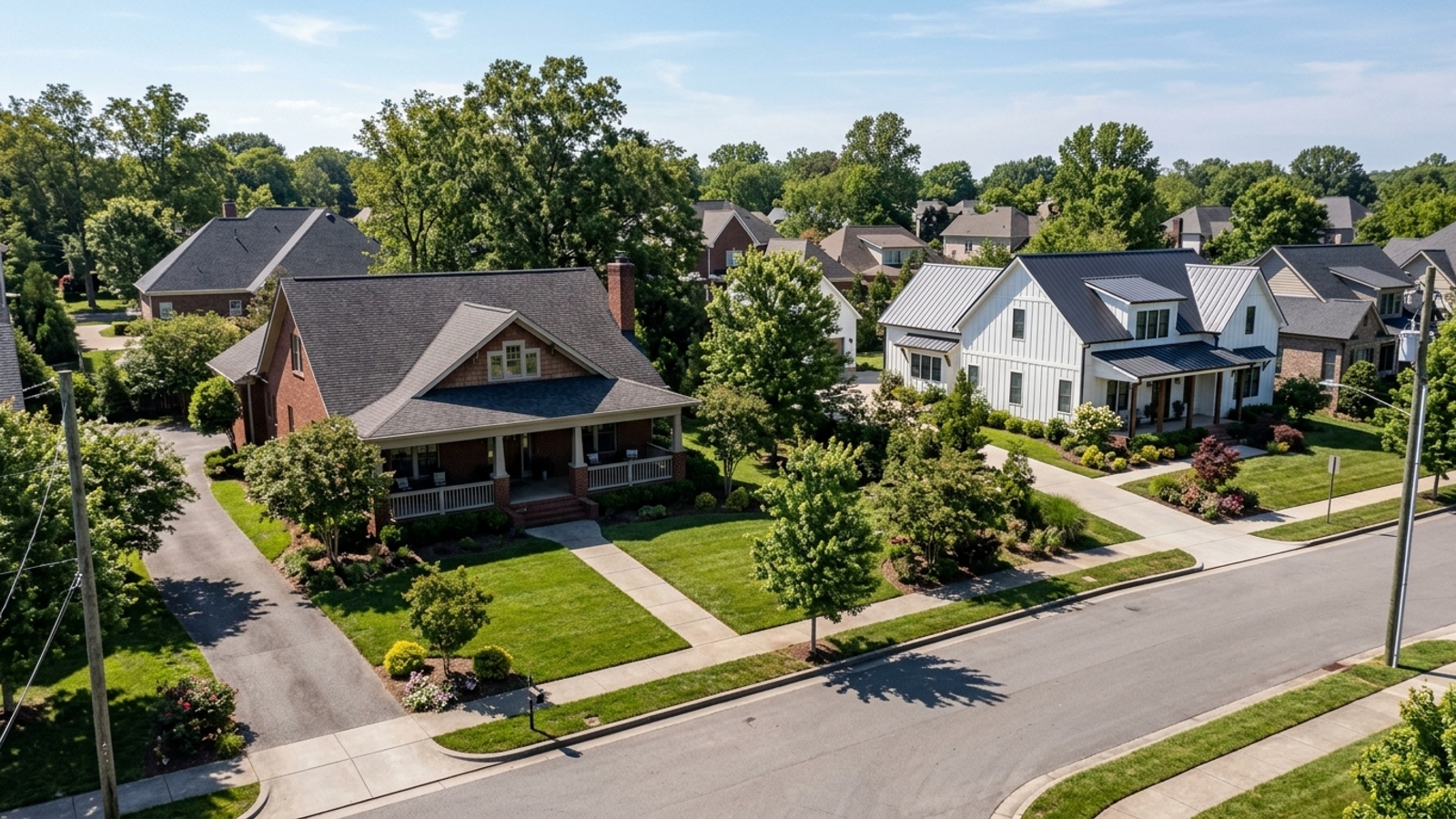
Nashville's real estate market is finding a new equilibrium, especially for first-time home buyers in Nashville, TN. With the median home price sitting around $475,000, both buyers and sellers are watching financing costs closely - and for good reason.
A small shift in borrowing costs changes what a buyer can afford and dictates how many offers a seller might receive. Knowing how these numbers work locally gives you a real edge when you're planning your next move in Davidson County.
How Today's Mortgage Rates Work in Nashville, TN
National headlines love to quote one tidy interest rate, but that number is rarely what you'll see on your actual paperwork. Lenders price their loans based on a complex mix of global bond markets, local economic conditions, and your personal financial profile - all at once.
Rates move throughout the trading day. Check a bank's website in the morning, check it again after lunch, and the quote may already be different.
Where to Find Your Actual Rate
No generic website or national news broadcast is going to tell you what you personally qualify for. The only way to know your real number is to get a same-day quote from a lender or review an official Loan Estimate. These documents lay out the specific terms a bank is willing to offer based on your actual application - factoring in property type, down payment, and the loan product you're pursuing.
Why Rates Change Every Day
Mortgage pricing is tied to the broader financial markets, specifically mortgage-backed securities. When economic reports suggest inflation is cooling, borrowing costs often drift downward. Strong economic data or shifting Federal Reserve policies tend to push yields the other direction. Lenders update their pricing sheets daily - sometimes multiple times a day - to stay current with those movements.
What Today's Rate Means for Your Buying Power in Davidson County
A half-percent change in your interest rate completely alters what it costs to own a home each month. In Nashville, where homes typically spend roughly 64 days on the market, you have some time to shop carefully - but you need to know exactly what your budget allows before you start.
Davidson County's effective property tax rate runs roughly 0.81% of a home's market value. Layer in home insurance, which commonly runs between $2,000 and $3,300 per year locally, and your total monthly obligation comes into sharper focus.
Comparing Payments on a Typical Nashville Home
Take a home priced at the local median of about $475,000 with a 20% down payment. For illustration only: at a 6% interest rate, the principal and interest payment lands near $2,278 per month. At 6.5%, that same loan costs roughly $2,401 per month. Push the rate to 7% and you're looking at about $2,528 - a $250 monthly difference without changing the house or the purchase price by a single dollar.
The Trade-Off Between Price and Rate
Buyers often have to decide between waiting for lower borrowing costs and securing a home before prices climb. When rates drop, more buyers come off the sidelines, competition picks up, and final sale prices tend to rise with it. Paying a slightly higher rate on a lower purchase price is sometimes the smarter play. You can refinance a loan later; you can't renegotiate the price you already paid.
Loan Types That Shape Your Monthly Payment
The 30-year fixed loan is the most common choice for Nashville buyers, but it's far from the only option. The structure of your loan determines how much interest you pay over time and how your payments behave month to month. Lenders price these products differently based on risk and repayment timeline, so the right structure depends on how long you plan to stay.
Fixed-Rate Options Versus Adjustable-Rate Mortgages
A 30-year fixed mortgage spreads your payments out, keeping your monthly obligation lower and entirely predictable. A 15-year fixed comes with a lower interest rate, but the compressed timeline means your monthly payments are noticeably higher. Adjustable-rate mortgages - ARMs - offer a lower introductory rate for a set period, usually five to seven years, after which the rate adjusts annually based on market conditions. That makes ARMs a reasonable choice if you're confident you'll sell or refinance before the fixed period ends.
Conventional, FHA, VA, and USDA Differences
Conventional loans tend to reward buyers with strong credit and larger down payments with the best pricing. Government-backed loans work under different guidelines and often come with distinct advantages. FHA loans offer competitive rates for buyers with lower credit scores, though they require mortgage insurance. VA loans provide excellent terms and zero-down options for eligible veterans. USDA loans are available to buyers in designated rural areas outside the main Nashville metro.
How to Secure a Lower Mortgage Rate
Lenders save their lowest advertised rates for buyers with clean financial profiles. A few proactive steps before you start touring homes can meaningfully improve the terms you're offered. Your financial habits in the months leading up to a purchase have a direct bearing on what lenders put in front of you - and small improvements can save you thousands over the life of the loan.
The Impact of Your Credit Score
Your credit score is the primary metric lenders use to gauge risk. A score above 740 typically unlocks the most favorable pricing tiers. Below that, expect higher rate quotes to offset the lender's exposure. Pull your credit reports months before you plan to buy - correct any errors and pay down revolving debt before you apply.
Down Payments, Points, and Rate Locks
Putting more money down lowers your loan-to-value ratio, which often earns you a better rate. You can also pay discount points at closing - essentially prepaying interest upfront to permanently reduce your rate. Once you're under contract on a home, a rate lock protects you from market swings during the closing process. Most locks cover a specific period, usually 30 to 60 days, guaranteeing that your quoted rate doesn't move before you get to the table.
Choosing the Right Mortgage Lender in Nashville
The lender you choose matters as much as the loan product. Nashville buyers can work with national banks, local credit unions, direct lenders, or independent mortgage brokers. Routing your file through an out-of-state call center and working with a local professional who knows Davidson County's market are two very different experiences.
The Local Advantage
A Nashville-based loan officer is reachable during your actual shopping hours - including weekends, when most offers get written. They have existing relationships with local appraisers and title companies, which helps keep deals on schedule. When you're competing against other buyers, a pre-approval letter from a recognized local lender carries real weight with listing agents. It signals that your financing is solid and backed by someone who understands how this market works.
Questions to Ask Before Committing
Apply with at least two lenders and compare their Loan Estimates side by side. Don't stop at the interest rate - look at origination fees, processing charges, and third-party costs. Ask about average closing timelines and how they handle communication outside standard business hours. The right lender will offer competitive terms and give you confidence they'll perform when it counts.
Selling Your Home When Rates Are Shifting
There are currently about 5,321 homes for sale in the Nashville area, which gives buyers more options than they had a few years ago. For sellers, that means pricing and presentation require real attention. Borrowing costs directly affect how many buyers can qualify at your asking price, and when rates trend upward, that pool gets smaller - which typically means fewer showings and longer listing periods.
How Rates Shape Buyer Demand
Buyers are shopping based on a monthly payment they can sustain, not just the sticker price on a listing. If financing costs rise sharply, a buyer who could have afforded your home last month may not qualify today. That shift influences the entire negotiation dynamic. With homes averaging around 64 days on the market, buyers feel less urgency to waive contingencies or offer above asking.
Pricing and Timing Your Listing
Sellers should be looking at recent comparable sales alongside the current lending environment. Pricing competitively from the start is far more effective than testing a high number and cutting it later - that strategy costs you time and signals weakness to buyers. A well-priced home in Davidson County still draws solid offers, as evidenced by a recent average sale-to-list ratio of 97.5%. A local agent who's watching the active buyer pool right now can help you land on the right number from day one.
Mortgage Rate FAQs
What are mortgage rates today in Nashville, TN?
Mortgage rates change daily based on bond markets and economic data, so there's no single static number to point you to. To see what rates look like for your specific situation, request a customized quote or a Loan Estimate from a local lender. That document will reflect your credit score, down payment, and property details.
Should I wait for rates to drop before buying a home in Nashville?
It depends on your timeline and your housing needs. Waiting for lower rates can backfire if home prices rise in the meantime or if increased buyer competition leads to bidding wars. Many buyers choose to purchase when they find the right home, knowing they can explore refinancing later if rates decline.
How much does a 1% difference in my mortgage rate affect my buying power in Nashville?
A 1% shift in your interest rate moves your monthly principal and interest payment by hundreds of dollars. On a typical $475,000 Nashville home, that difference can push you into a lower price bracket just to keep your monthly budget intact - and it compounds in total interest paid over the life of the loan.
How do I get the best mortgage rate as a buyer in Nashville?
Start with your credit score - scores above 740 generally secure the best pricing. Saving for a larger down payment helps too. Then compare Loan Estimates from multiple local lenders before you commit to anything.
Are there any Tennessee or Nashville-specific homebuyer programs that offer lower mortgage rates?
State and local housing agencies sometimes offer fixed-rate mortgage products and down payment assistance for eligible buyers. Ask your local lender whether you meet the income and purchase price limits for any current Tennessee homebuyer initiatives.
How are current mortgage rates affecting home prices and buyer demand in the Nashville market?
Higher borrowing costs have cooled some of the intense buyer demand, resulting in a healthier inventory of about 5,321 available homes. Home prices have stabilized as a result, with the median sale price hovering around $475,000 and homes spending about 64 days on the market.
Getting Local Guidance for Your Next Move
A real estate transaction has a lot of moving parts, and securing the right financing is just one of them. Before you start filling out loan applications, it's worth mapping out your overall strategy with someone who knows this market.
A local real estate agent can walk you through current conditions and connect you with lenders who have a track record in Davidson County. Having the right team around you from the start means you're making confident, informed decisions - from your first showing to the closing table.