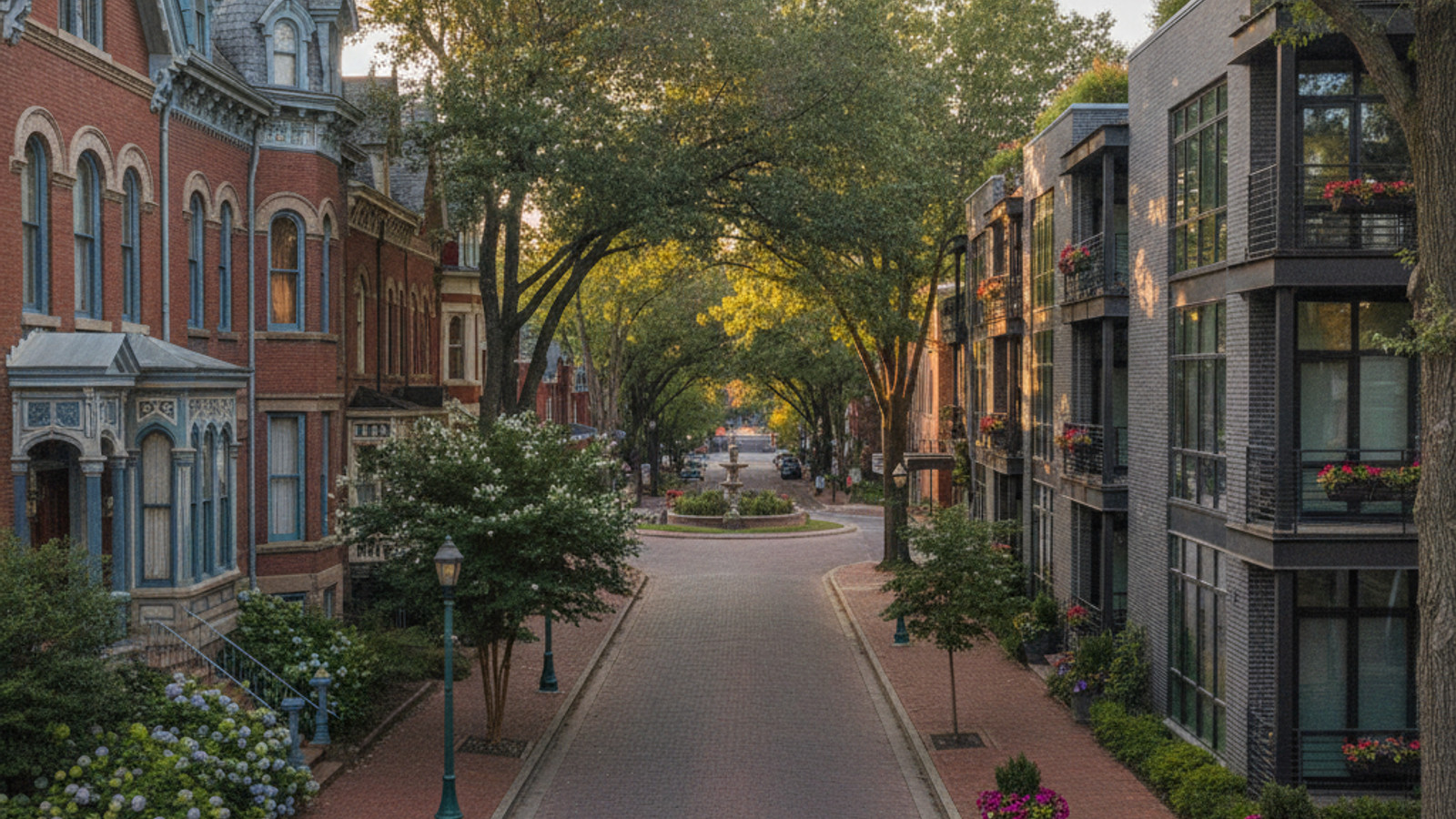
Germantown sits just north of downtown Nashville, and if you've spent any time there, you already know the streetscape is unlike anything else in the city - original 19th-century Victorian architecture, brick sidewalks, and a spot on the National Register of Historic Places. Landmarks like the Tennessee State Museum and Bicentennial Capitol Mall State Park are practically in the backyard. Many buyers consider it one of the best neighborhoods in Nashville, TN, for its history and location.
The market reflects all of that. Over the three months ending in May 2026, the median home sale price in Germantown came in around $708,000, while Nashville's citywide median sits closer to $483,100. You'll find a mix of restored historic properties and newer developments built around the neighborhood's established commercial corridors - and the price gap between Germantown and the rest of Nashville isn't an accident.
What to Expect in Germantown, Nashville, TN
Germantown functions as its own residential and commercial district within Davidson County. The Nashville Farmers Market anchors part of the neighborhood, and the borders with major state landmarks give residents direct access to large public spaces without getting in a car.
What actually defines the place, though, is the architecture. Original 19th-century Victorian houses share blocks with modern townhomes and condo buildings. Brick sidewalks connect residential streets straight to the shops and restaurants operating along the main commercial corridors. It's a dense, walkable configuration that doesn't exist in many other parts of Nashville.
Location and Historic Architecture
The National Register designation isn't just a historical footnote - it shapes what buyers can actually do with their properties. Exterior renovations and additions on older homes are subject to preservation guidelines, so if you're planning to put on a second story or change the facade, expect a review process before you pick up a hammer.
The inventory runs the full spectrum: restored single-family homes, attached townhouses, multi-unit buildings. That density means residents live within easy reach of the dining and retail that give the neighborhood its daily energy.
Position Within the Broader Nashville Area
Germantown sits immediately northwest of the central business district. Interstates 24 and 40 run close to its borders, which means commuters can reach other parts of Davidson County without threading through downtown surface streets. For anyone working at employment centers spread across the metro, the location is genuinely practical.
Germantown Real Estate and Home Prices
Homes here average 74 days on the market - a bit slower than Nashville's citywide average of 59 days. The median sale price lands at roughly $708,000 as of mid-2026, which represents a 15.1% year-over-year increase for the neighborhood. Zillow's home value index puts the average slightly lower at $625,203, but closed sales consistently reflect a premium for this area.
The citywide average sits around $483,100, so Germantown runs well above the local baseline. That gap isn't closing.
Property Types and Historic Homes
On the older end, you're looking at mid-1800s Victorian houses with original millwork, hardwood floors, and the smaller footprints typical of their era. On the newer end, attached townhomes and condominiums with homeowners associations. If you're considering the latter, build HOA dues into your monthly number from day one - they add up, and buyers sometimes underestimate them.
How Germantown Prices Compare to Nashville
The $708,000 median reflects the neighborhood's density and its proximity to downtown. Nashville's broader market currently carries about 5.4 months of supply, but Germantown's historic constraints and smaller geographic footprint mean the pool of available listings at any given moment is thin. Property values vary sharply by zip code across the city, and Germantown is consistently at the upper end of that range.
Daily Life, Dining, and Getting Around
Germantown has a genuine reputation as one of Nashville's serious culinary destinations - not a marketing phrase, just a fact. Three restaurants in the neighborhood are run by James Beard award recipients. The Nashville Farmers Market adds daily access to fresh produce, local vendors, and a large food hall. Most residents don't need to leave the neighborhood for meals or basic entertainment, and the grid layout makes walking practical for getting to most of it.
Local Restaurants and Culinary Landmarks
The anchor names are City House, run by James Beard-winning chef Tandy Wilson, and Henrietta Red, an established oyster bar. Butchertown Hall, 5th & Taylor, and Rolf and Daughters round out the prominent spots. For everyday meals, residents tend toward Germantown Cafe, The Optimist, and Monell's Dining & Catering.
That concentration of dining means foot traffic during evening service hours is real - which is relevant if you're looking at a home near the commercial corridors and wondering about parking.
Transit Routes and Commuting
Interstates 24 and 40 form a ring near the neighborhood and connect to the airport, the suburbs, and commercial districts across the region. Surface streets drop you directly into downtown Nashville. The proximity to the state capitol and central business district means some residents walk or bike to work - which is genuinely rare for a Nashville address.
Schools, Healthcare, and Climate Facts
Germantown sits about 3 miles north of Ascension Saint Thomas Hospital Midtown and Vanderbilt University Medical Center. Metro Nashville Public Schools (MNPS) manages public education for the area. Nashville's climate follows standard seasonal patterns - hot summers, mild winters, and high humidity from June through August. If you're relocating from a drier region, that summer humidity is worth knowing about before you move.
Everyday services like clinics and schools generally sit just outside the neighborhood's immediate historic boundaries.
Metro Nashville Public Schools
The neighborhood falls within Davidson County and is served by the Metro Nashville Public Schools district. Pearl-Cohn High School is one of the assigned schools for the area, but attendance zones depend on the exact street address. Verify your specific zone on the MNPS website before you submit an offer - boundaries can and do shift.
Nearby Hospitals and Medical Centers
Ascension Saint Thomas Hospital Midtown and Vanderbilt University Medical Center both operate roughly 3 miles south of Germantown. The nearby highway entrances to Interstates 24 and 40 make reaching either facility straightforward, bypassing downtown traffic when it matters.
How to Buy a Home in Germantown
The first thing to understand is that historic properties and new builds are fundamentally different purchases, both aesthetically and administratively. Older homes come with preservation guidelines governing exterior maintenance. Newer condos and townhomes come with HOA documents that need careful review before you sign anything.
Work with a local agent who actually knows the historic overlay rules and Davidson County zoning. It's a specific body of knowledge, and it matters here more than in most Nashville neighborhoods.
Searching for Available Listings
You'll find fully renovated 19th-century houses and new-construction townhomes in the active inventory. The 74-day average market time gives buyers a reasonable window to evaluate properties before committing - this isn't a market where you're routinely making same-day decisions. Focus your search around your tolerance for maintenance. A restored Victorian and a brand-new HOA-managed condo are very different ownership experiences.
Weighing Renting Against Buying
Renting is a reasonable way to test the neighborhood before committing to a $708,000 median purchase price. Rental options are mostly newer apartment buildings and leased condos. Buying locks in your housing cost in an area that posted a 15.1% year-over-year price increase by mid-2026. Run current mortgage rates against local lease prices and make the call with actual numbers, not assumptions.
Frequently Asked Questions
What is the approval process for renovating a house in the Germantown Historic Preservation district in Nashville?
It depends on the scope of the work. Because Germantown is on the National Register of Historic Places and features preserved 19th-century Victorian architecture, exterior modifications typically require review. Consult local historic zoning guidelines before you plan any renovations.
Do properties in Nashville's Germantown neighborhood require flood insurance due to their proximity to the Cumberland River?
It depends on the exact elevation and parcel map of the specific home. You'll need to check the official FEMA flood maps for the exact street address to determine whether flood insurance is a lender requirement - there's no blanket answer for the whole neighborhood.
Are non-owner occupied short-term rentals allowed if I buy an investment property in Germantown?
It depends on the property type and current Davidson County zoning laws. Nashville has specific regulations governing non-owner-occupied short-term rentals in residential neighborhoods. Verify the zoning status before you purchase an investment property.
How do real estate prices and HOA fees in Germantown compare to buying a home in The Gulch?
It depends on your housing preferences. Germantown carries a median home sale price of about $708,000, primarily in historic single-family homes and townhouses. The Gulch consists mostly of high-rise condos with different price points and generally higher monthly HOA dues.
Is street parking a major issue for buyers looking at historic Germantown homes without dedicated driveways?
Yes, street parking gets tight during evening hours. Restaurants like City House and Henrietta Red draw regular crowds, and patrons fill the available street spaces near the commercial corridors. Worth factoring in if the home you're considering doesn't have off-street parking.
How long do single-family homes in Germantown typically stay on the market before selling?
About 74 days on average - slightly slower than the broader Nashville market, where homes typically sell in roughly 59 days.